


As part of the Geneva Trialogue 2021, the European research project, Crowd4SDG led an online session on March 18th called “Helping Youth Innovators turn Ideas into Action”.
The Geneva Trialogue was a one-day event gathering academic, private sector and multilateral stakeholders to discuss knowledge and learning tools, platforms and initiatives for the Sustainable Development Goals (SDGs). Decision makers from these three circles gathered to deepen their understanding of the issues, trigger reflection, and proactively formulate proposals on how academia, international organisations and the private sector can support and transform the world of SDG education together.
The Crowd4SDG session “Helping Youth Innovators turn Ideas into Action” was hosted by Romain Muller of CERN. It was comprised of an expert panel from UNIGE Entrepreneur Lab, Goodwall, Global Green Connect, ITU, TechStars and Young Water Solutions. The group gave insight into how their own projects got started. They further discussed how they support young innovators and entrepreneurs bring their projects to life through educational programmes, coaching, mentorships, best practices and suggested ways to find new opportunities to create communities and ecosystems. The experts recommended that students focus on the problem they want to solve and not the idea. Students should stay flexible, embrace change, bring in other stakeholders and celebrate creativity.
Objectives of Crowd4SDG
The Crowd4SDG project promotes citizen science aimed at achieving the Sustainable Development Goals (SDGs), with a focus on climate action. The first call focused on Urban Water Resilience. Its goal is to assess the usefulness of practical innovations developed by the members and to research and investigate how artificial-intelligence applications can enhance and provide effective monitoring of SDG targets and indicators by citizens.
Students turning ideas into action to make an impact
Five teams of students from Brazil, Côte d’Ivoire, China, India, the United States and Europe set out to tackle the theme of Urban Water Resilience which they focused on during a two-week online workshop organised by the IdeaSquare team at CERN. They followed a series of lectures, workshops and daily assignments using design thinking, among other innovative methodologies, to polish and prototype their initial ideas. These teams were the finalists of the first call for ideas of the Crowd4SDG project, which sparked the interest of more than 100 students worldwide.
The Gear Cycle
The initiatives organized by Crowd4SDG follow a robust innovation cycle called GEAR (gather, evaluate, accelerate, refine). The GEAR cycle started with an online selection and coaching of citizen-generated ideas for climate action in autumn 2020. The most promising projects were then accelerated during a Challenge-Based Innovation Workshop run by IdeaSquare at CERN in January 2021.
The Projects
Five projects were presented in January including one from Université Paris Cité’ student, Parismollo and his team. The Potamoi project seeks to optimize the process of cleaning hydrological data in order to allow the improvement of flood forecasts and, consequently, reducing the number of deaths from floods and damaged properties. The team is passionate about making an impact on issues related to water resilience and their project can be found here. The top two projects “Well Yes!” and “To See to Care” were further refined at the SDG conference to give them a boost on their path towards creating real impact. See the video here
Crowd4SDG Members
The Crowd4SDG consortium is made up of Université Paris Cité and its Centre for Research and Interdisciplinarity CRI, University of Geneva, CERN, the Spanish National Research Council and its Artificial Intelligence Research Institute, Politecnico di Milano, the United Nations Institute for Research and Training.
Read more
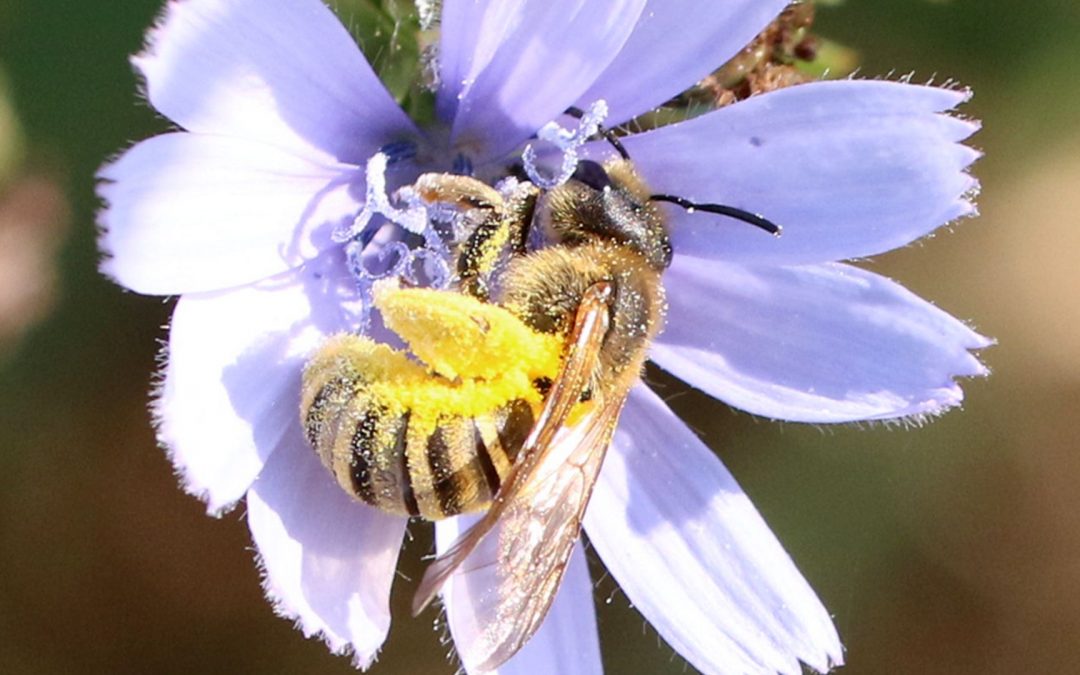
One in ten European bee species at risk, new biodiversity warning
The new european red list of bees published on February 26th catalogs almost 2000 species and draws a worrying observation that 172 species in Europe are now endangered. 10 years after a first partial assessment, our understanding of the situation has become much...

Research Call for Proposals 2026 Université Paris Cité – University of Toronto
As part of the strategic partnership between Université Paris Cité (UPCité) and the University of Toronto (U of T), a new research call for proposals is launched for 2026. The submission deadline is May 13, 2026. Two previous calls were held in 2024 and 2025, with a...

A new feature produced by RFI with the support of Université Paris Cité: ‘Décalages culturels’
The radio program ‘8 milliards de voisins’ is now broadcasting ‘Décalages culturels’, a new RFI feature, produced in partnership with Université Paris Cité and spearheaded by its Educational Innovation Hub (PIP). Décalages culturels: exploring interculturality...
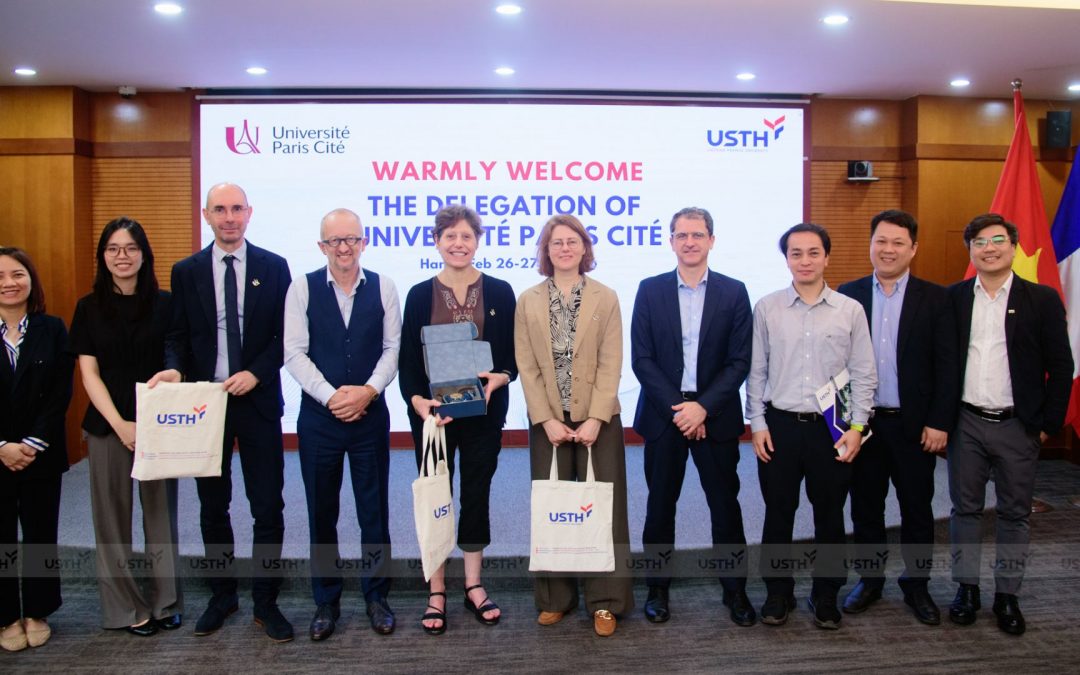
Université Paris Cité strengthens its alliances in Asia
From Vietnam to Singapore, including the APAIE exhibition in Hong Kong, a delegation from Université Paris Cité recently traveled to Asia to meet several strategic partners on the continent: the University of Science and Technology of Hanoi (USTH) and the National...