

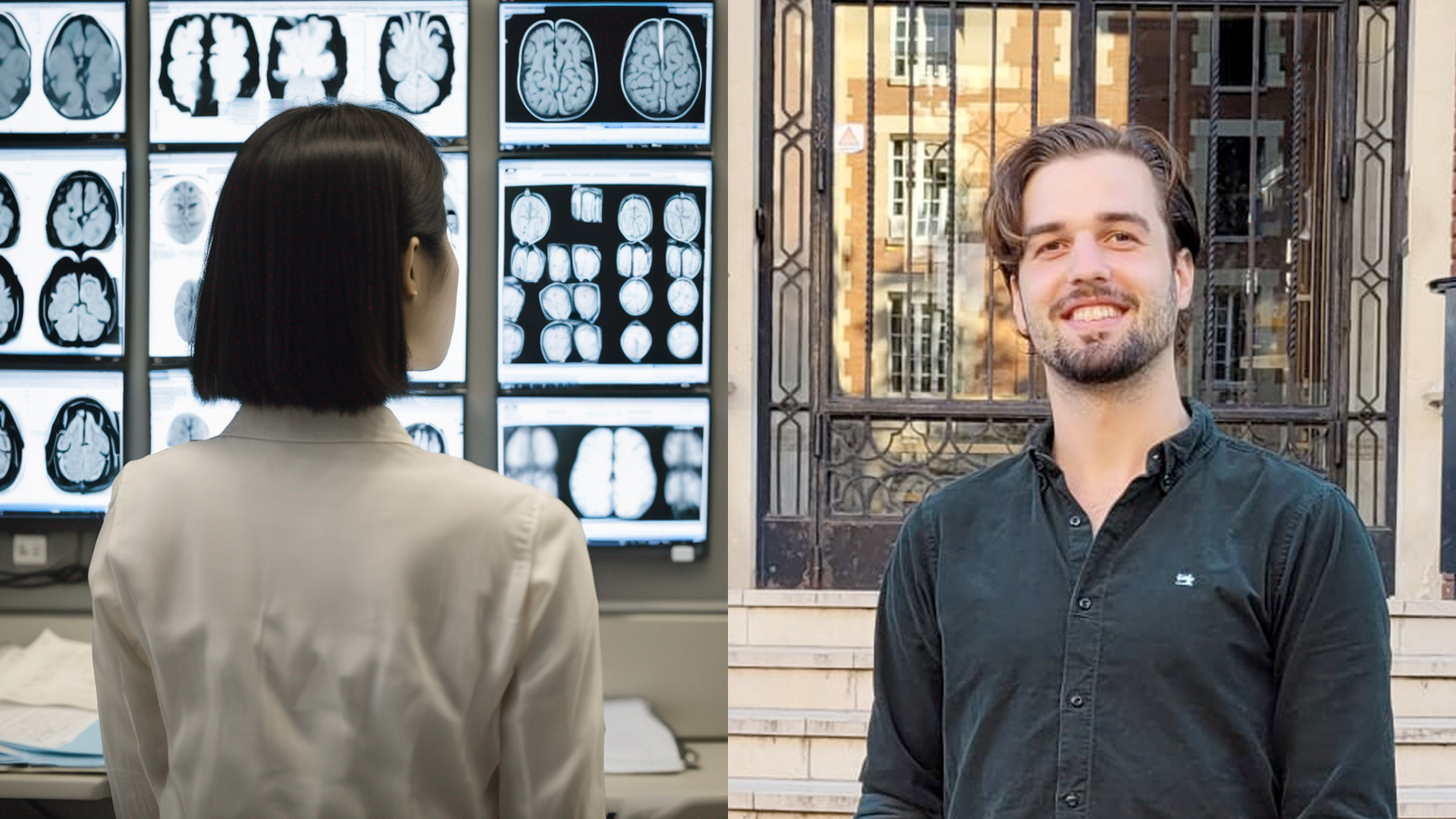
Discover the testimonials of two of our six Eiffel Scholarship recipients: Benjamin Schnars, comes from Germany, enrolled in the EPOG+ (Economic Policy of the Global Transition) Master’s programme at the Faculty of Humanities and Social Sciences, and Yuen Victoria Shi, from Australia, pursuing the BME Master’s programme at the Faculty of Sciences.
How did you learn about the Eiffel scholarship?
Victoria: I found out about the Eiffel scholarship on the BioMedical Engineering Paris website, when I was looking to apply for my Master’s degree.
Benjamin: My Master’s coordinators informed me about the possibility of obtaining an Eiffel scholarship. One of my peers was a former scholarship recipient who told me about his experience.
Why did you choose Université Paris Cité for your studies and France in general?
Victoria: I chose Université Paris Cité to focus specifically on the Bioinnovation in Neurosciences Master 2 specialisation and to study abroad to broaden my world view and learn different ways of thinking and different cultures. I believe that diversity will lead to new ideas and abilities to creatively summarise information. I wanted to learn from researchers from another country, and I think Université Paris Cité fosters interdisciplinary engagement and collaboration. I also liked the opportunity to play sports.
Benjamin: I’m enrolled in the Erasmus Mundus EPOG+ (Economic Policy of the Global Transition) Master’s programme. The programme is run jointly by UTC, Sorbonne Université and Université Paris Cité. I absolutely wanted to take this programme, as it is organised and taught by Europe’s leading heterodox economics professors. I had already learned a little French at school. I’d already lived in Berlin and Rome, so Paris was the next logical step for me to discover Europe’s major cities.
What’s special about your Master’s programme?
Victoria: The unique feature of the BME Master’s degree is its specialisation in neuroscience, which corresponds exactly to my career goals. What’s more, I believe that the future of this field, like many others, will require close collaboration between individuals from different backgrounds in order to meet increasingly complex challenges.
Benjamin: The EPOG Masters programme is an opportunity to meet great students from all over the world, make friends, discover Europe’s major cities and learn about European culture, and above all to learn economics from a heterodox perspective. This means finding realistic, interdisciplinary answers to today’s questions.
What are your career plans?
Victoria: I hope to improve the quality of life of those living with neurological and neuropsychiatric disorders through the use of engineering sciences and technology. I hope to translate biomedical research efficiently into tangible solutions. I would like to work in healthcare innovation and/or neurotechnology research and development.
Benjamin: I would like a society based on mutual respect, ecology and the common good. And since change begins on a small scale, I’m looking for alternative development strategies for regions and cities, far from global financial capitalism.
What made your arrival and integration at the university smoother?
Victoria: The university organised an immersion week with lots of activities where I had the chance to meet my new classmates.
Benjamin: The most valuable assistance with housing, administrative documents, etc. was provided by the Eiffel scholarship programme. But what really helped me at university was the campus infrastructure: good classrooms, a nice library and two Crous restaurants.
What advice would you give to an international student who has just moved to France?
Victoria: Get used to the atmosphere, adopt a different lifestyle and learn about France’s wonderful history!
Benjamin: Get organised quickly to find housing and a transportation pass. From there, enjoy your studies and your life in France!
Read more
Eiffel Excellence scholarship 2027
The Eiffel scholarship programme launched by France’s Ministry of Europe and Foreign Affairs is now open for the 2027–2028 academic year. The programme enables international students to benefit from a mobility grant and pursue courses at the master’s and doctorate...
read more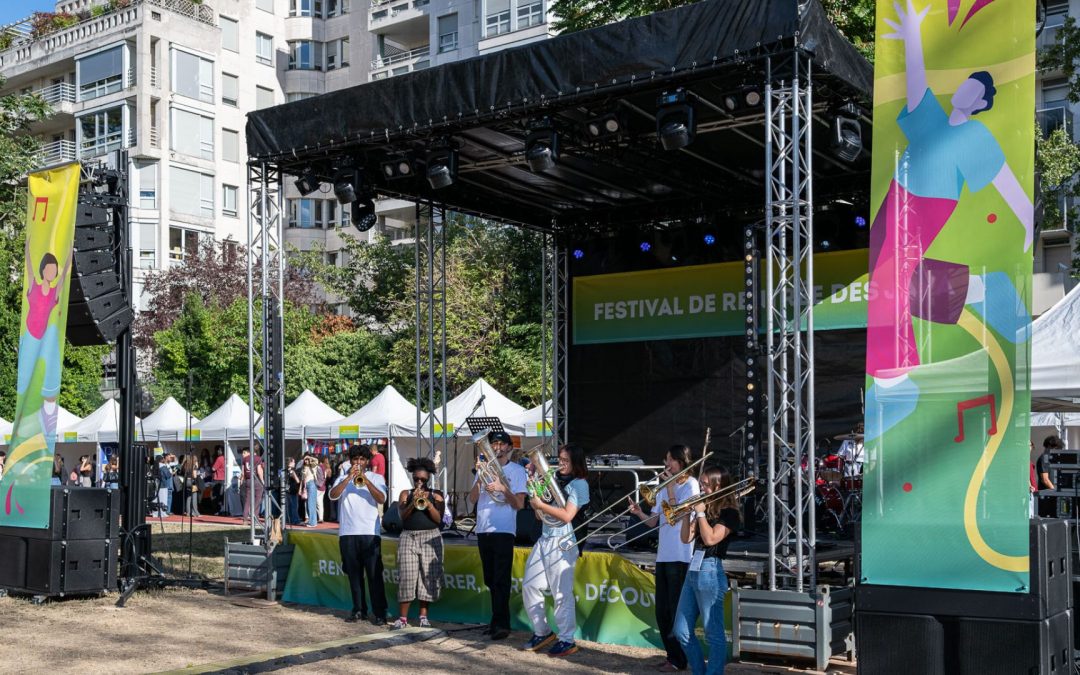
Great Success for the 2026 Edition of the JAVA Back-to-School Festival
A must-attend event at the start of the academic year, the Welcome and Student Association Days, or Journées d’Accueil et de la Vie Associative (JAVA), kicked off September at Université Paris Cité. The highlight of this 2026 edition: the Back-to-School Festival...
read more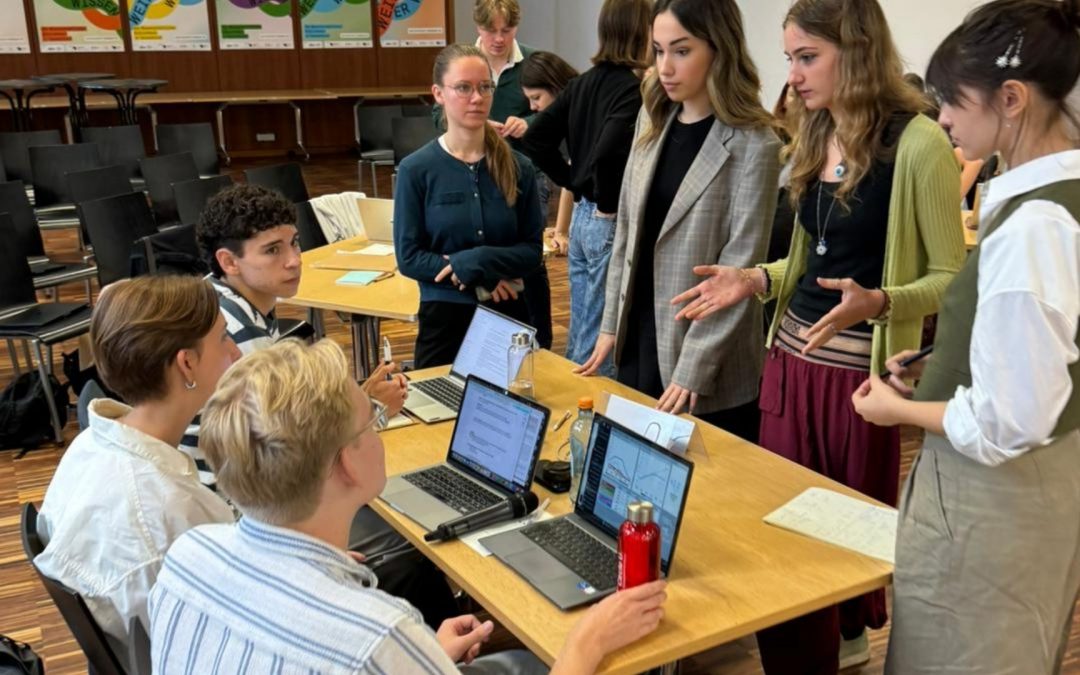
Do you have to be bilingual to participate in Circle U. activities
Going abroad to study in a foreign language can seem intimidating. Yet a first experience may be all it takes to build confidence and take the leap. Irina tells us how taking part in one of Circle U.’s summer schools helped her gain confidence and prepare for a...
read more
How Circle U. helped me define my career path
Susanna’s journey with Circle U. began with an online course. This first experience allowed her to discover the alliance and marked the beginning of a journey that led her to become a student ambassador, pursue a double degree in Paris, and complete an internship at...
read more