

On March 29 at 7:30 pm, Université Paris Cité and the Collège de France invite you to an exceptional lecture by Professor Ardem Patapoutian, Nobel Prize in Medicine 2021. The lecture, in English only, will be entitled “How do you feel? The molecules that sense touch”.
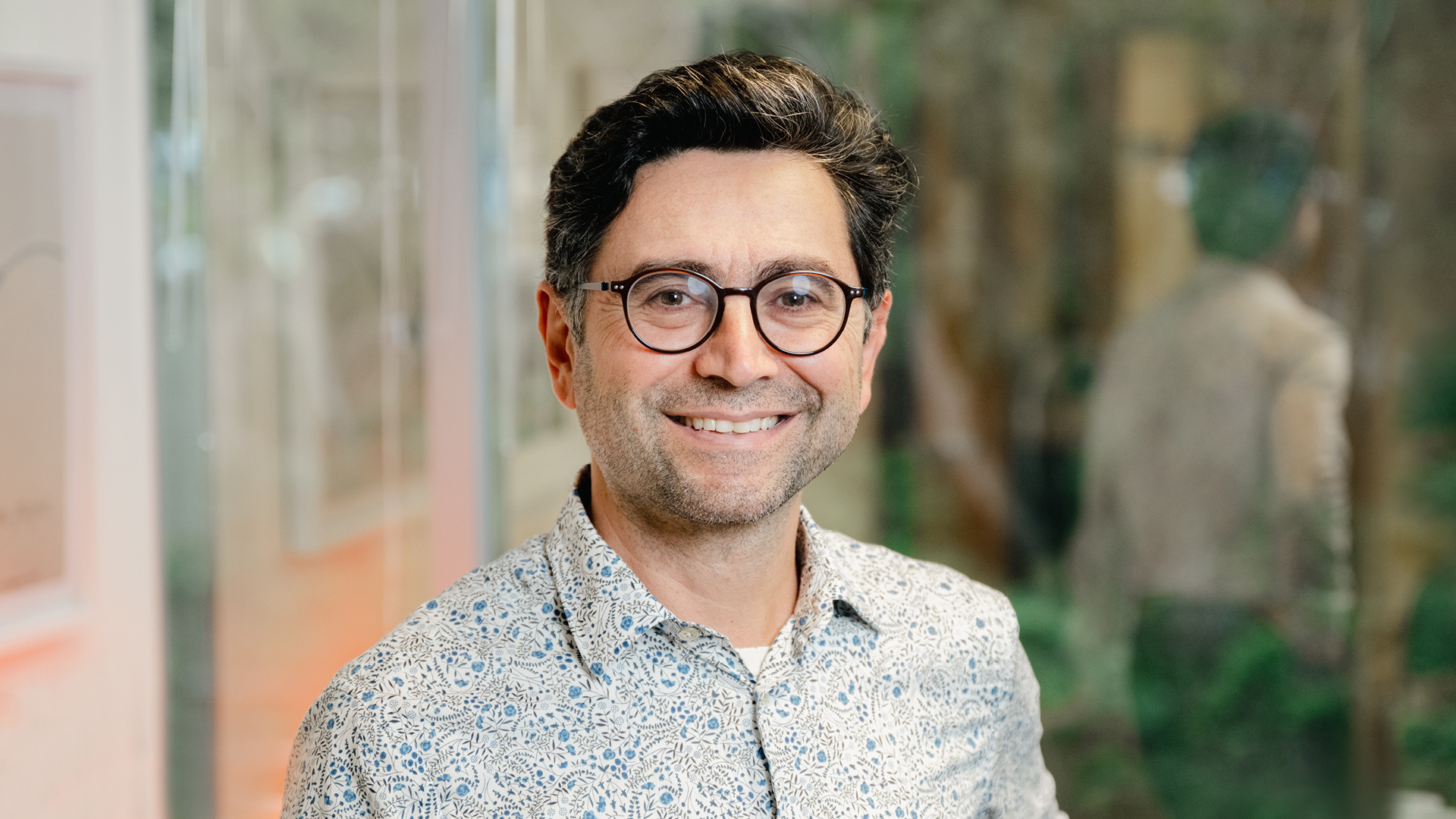
Pr Ardem Patapoutian
© Scripps Research Institute
About Ardem Patapoutian
Ardem Patapoutian is a molecular biologist specializing in sensory transduction. His research has led to the identification of novel ion channels and receptors activated by temperature, mechanical force, and increased cell volume. His laboratory has shown that these ion channels play crucial roles in sensing temperature, touch, proprioception, pain, and regulating vascular tone. Patapoutian was born in Lebanon in 1967 and attended the American University of Beirut for one year before he immigrated to The United States in 1986 and became a US citizen. He graduated from UCLA in 1990 and received his Ph.D. at Caltech in the lab of Dr. Barbara Wold in 1996. After postdoctoral work with Dr. Lou Reichardt at UCSF, he joined the faculty of Scripps Research in 2000, where he is currently a Professor in the Department of Neuroscience. He also held a position at the Genomics Institute of The Novartis Research Foundation from 2000-2014. Patapoutian was awarded the Young Investigator Award from the Society for Neuroscience in 2006 and was named an Investigator of the Howard Hughes Medical Institute in 2014. He is a fellow of the American Association for the Advancement of Science (2016), a member of the National Academy of Sciences (2017) and a member of American Academy of Arts and Sciences (2020). He is a co-recipient of the 2017 Alden Spencer Award from Columbia (with David Ginty), the 2019 Rosenstiel Award for Distinguished Work in Basic Medical Research (with David Julius), the 2020 Kavli Prize in Neuroscience (with David Julius), the 2021 BBVA Foundation Frontiers of Knowledge Award (shared with David Julius), and the 2021 Nobel Prize in Physiology or Medicine (with David Julius).
About the conference
We often say that seeing is believing. But touching is also believing. Our sense of touch holds the capacity to connect us with the world and warn us of harm and hurt. But how exactly do you sense a gentle breeze or a cactus pricking your finger? How do you feel the embrace of a loved one? These senses depend on mechanotransduction, the conversion of pressure into chemical signals, which is perhaps the last sensory modality not understood at the molecular level. Dr. Patapoutian will discuss work from his laboratory that identified and characterized PIEZO1 and PIEZO2, pressure-activated cation channels. Genetic studies established that PIEZO2 is the principal mechanical transducer for touch, proprioception, baroreception and bladder and lung stretch, and that PIEZO1 mediates many mechanosensory roles throughout the body. Clinical investigations have confirmed the importance of these channels in human physiology.
> Free admission subject to availability
Key informations
Tuesday, the 29th of March at 7:30 pm
Collège de France
Amphitheatre Marguerite de Navarre
11 place Marcelin Berthelot – 75005 Paris
Free entrance with the limit of available seats
À lire aussi
Eiffel Excellence scholarship 2027
The Eiffel scholarship programme launched by France’s Ministry of Europe and Foreign Affairs is now open for the 2027–2028 academic year. The programme enables international students to benefit from a mobility grant and pursue courses at the master’s and doctorate...
read more
Bourse d’excellence Eiffel 2027
L'appel à candidature bourse Eiffel pour l'année académique 2027-2028 est ouvert. Instauré par le Ministère de l’Europe et des Affaires Étrangères, le programme de bourses Eiffel permet aux meilleurs étudiants et étudiantes internationaux de bénéficier d’une aide à la...
read more
SANTÉ MENTALE : COMPRENDRE LES VULNÉRABILITÉS, ACCOMPAGNER LES PARCOURS
SANTÉ MENTALE :COMPRENDRE LES VULNÉRABILITÉS, ACCOMPAGNER LES PARCOURSÀ l’occasion de la Journée mondiale de la santé mentale, le 10 octobre, l’Université Paris Cité met en lumière quelques-unes de ses recherches, formations et initiatives interdisciplinaires...
read more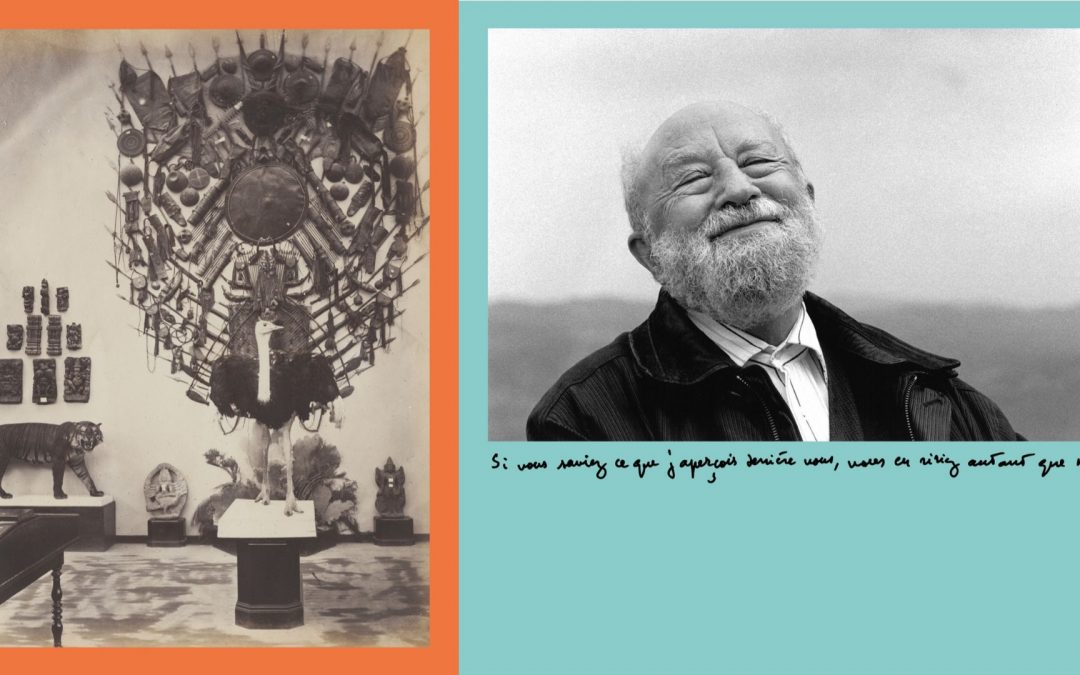
La photographie, autrement : deux nouveaux ouvrages chez Université Paris Cité Éditions
Le 16 octobre, Université Paris Cité Éditions publie deux nouveaux ouvrages dans sa collection « Longue vue », consacrée à la photographie et au patrimoine visuel. Avec Michel Butor. Portrait ultrasensible et Traverser le monde. Le tournant photographique de...
read more