


East Asian Studies
The Graduate School of East Asian Studies provides students with double expertise, an excellent level in an oriental language (Chinese, Korean, Japanese or Vietnamese) and in the human and social sciences. The training is resolutely multidisciplinary, but students have to choose a primary disciplinary orientation among three: Letters, Philosophy and Arts; Linguistics and Didactics; or History, Societies and Territories.


Presentation
The Gradute School of East Asian Studies trains high-level international students. At the end of the two (or three) years program (in the case of an extended stay abroad), they have an excellent command of an oriental language (Chinese, Korean, Japanese or Vietnamese). They are familiar with the latest developments in research in the humanities and social sciences in their area of specialisation.
The courses are taught in French, English and Oriental languages, and students are expected to spend time in their country of specialisation.
The skills acquired ensure that students have a variety of opportunities in the labour market and, for those who wish, the possibility of pursuing a career in research through doctoral training. The disciplines practised within the programme are varied: classical text studies, literary studies, linguistics, ancient, modern and contemporary history, sociology, anthropology, and political science.
Since septembre 2021, several initiatives are being taken to strengthen the international dimension of the Graduate School of East Asian Studies:
- Several social sciences master seminars are taught in English;
- A cycle of lectures is given by visiting foreign professors;
- Cross-curricular training enriches master courses, including a seminar on publications and careers in the English-speaking world.
Website
Department of East Asian Languages and Civilizations
Contact
Ken DAIMARU
ken.daimaru@u-paris.fr
Prof. Gilles GUIHEUX
gilles.guiheux@u-paris.fr
Adress
UFR LCAO
Grands Moulins
5 rue Thomas Mann
75013, Paris
Masters
LLCER – Foreign and regional languages, literatures and civilisations:
Research
Each faculty member speaks at least one Asian language – Chinese, Korean, Japanese or Vietnamese – and specialises in one discipline such as literary studies, classical studies, linguistics, ancient, modern and contemporary history, sociology, anthropology or political science. Research is conducted in research centres associated with national organisations (CNRS, IRD), in collaboration with other higher education and research institutions (INALCO, Collège de France, Ecole Pratique des Hautes Etudes, EHESS).
Executives
The Graduate School of East Asian Studies is co-directed by Ken DAIMARU and Gilles GUIHEUX, in coordination with a steering committee composed of the director of the LCAO department, the president of the scientific council of the department, the persons in charge of the four master degrees involved, and representatives of the four sections (China, Korea, Japan, Vietnam).
- Ken DAIMARU
Senior lecturer
Japanese History
East Asian Civilizations Research Centre (CRCAO) - Prof. Gilles GUIHEUX
Professor, sociology of China
Member of Centre d’études en sciences sociales sur les mondes africains, américains et asiatiques (CESSMA)
À lire aussi
L’Université Paris cité, pilote du pôle Santé Globale de Circle U.
Face aux défis environnementaux, sociaux et économiques qui impactent la santé, les universités doivent plus que jamais adopter des approches intersectorielles et proposer des réponses coordonnées, tant à l’échelle locale qu’internationale. L’Université Paris Cité,...

Finale Ma Thèse en 180s : le 31 mars 2026, votez pour le prix du public
Humour, poésie, jolies histoires... 15 candidates et candidats représentant l’Alliance Sorbonne Paris Cité (ASPC) au concours Ma Thèse en 180 secondes s’affronteront en finale locale devant les jurys et le public, le 31 mars 2026 à 18h30. La finale sera retransmise en...
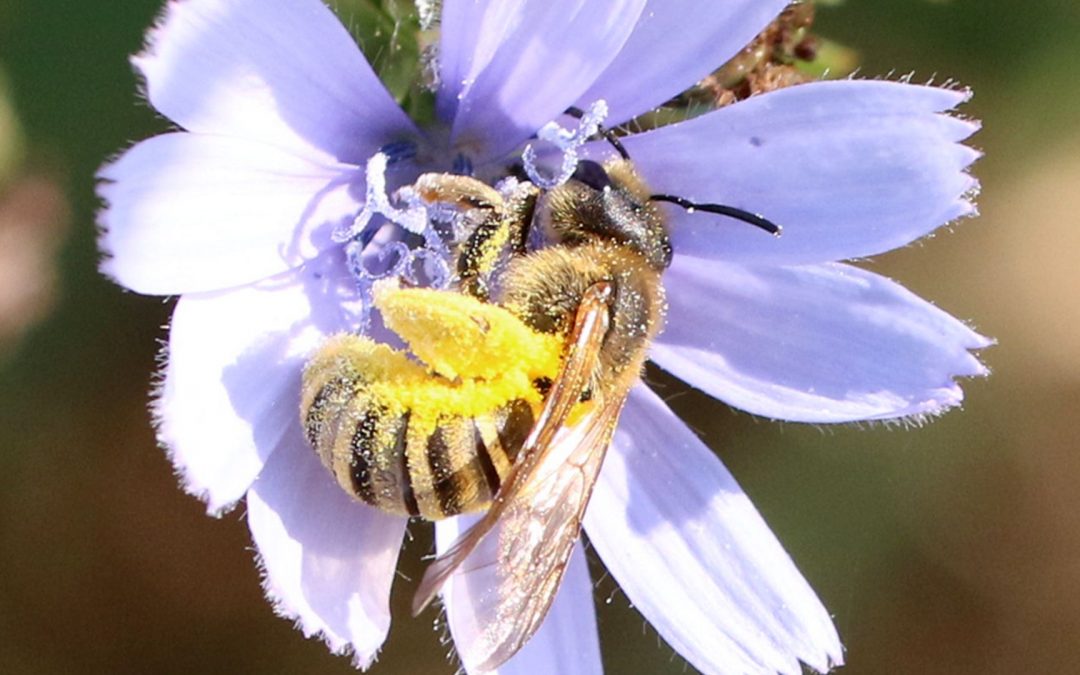
One in ten European bee species at risk, new biodiversity warning
The new european red list of bees published on February 26th catalogs almost 2000 species and draws a worrying observation that 172 species in Europe are now endangered. 10 years after a first partial assessment, our understanding of the situation has become much...
