

“Parlons demain” with Dimitri Labat
Parlons demain is a serie of interviews with Université Paris Cité alumni that enlighten the future.
Dimitri is one of them ! He’s the co-founder of Chipiron. Let’s meet him.
Chipiron has been singled out by Challenges magazine as one of the 100 start-ups to invest in in 2022. Its promise: to make MRI (magnetic resonance imaging) accessible to everyone, everywhere.
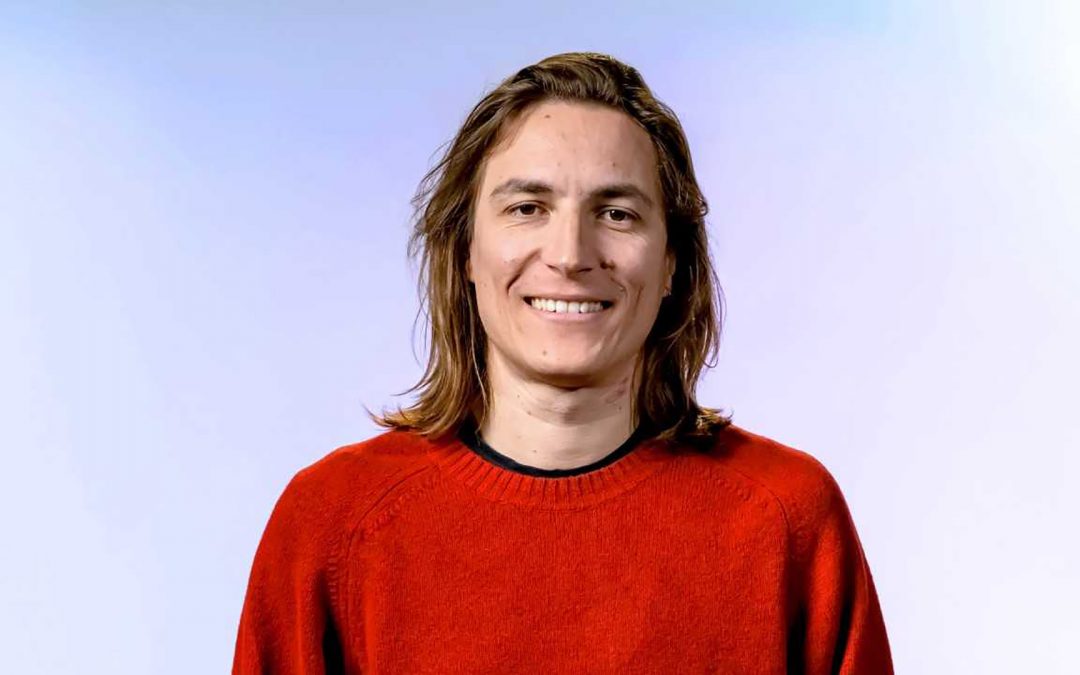
Dimitri’s academic background is outstanding. He holds an agrégation in physics, a degree from the Ecole Normale Supérieure and a Phd in condensed matter physics. Dimitry is a true jack-of-all-trades ! He has taught Physics, done fundamental research and worked at the Banque de France where he designed and implemented mathematical models to monitor the activity of insurance companies.
When he created Chipiron, Dimitri wanted to “take research out of the laboratory and make it have a direct impact on people’s lives and on society”. His goal is to democratize MRI and give access to this powerful medical imaging technique to all of those who need it to benefit from the best medical imaging technique available.
À lire aussi

Call for Interdisciplinary Research Proposals: Sciences Po & Université Paris Cité 2026
As part of the partnership between Université Paris Cité and Sciences Po, a new call for proposals has been launched to identify large-scale, interdisciplinary and collaborative research projects addressing major contemporary issues. This call will take place in two...
read more
Doctoral Mobility: Results of the Call for Projects between Université Paris Cité and the University of Toronto
As part of the strategic partnership between Université Paris Cité (UPCité) and the University of Toronto (U of T), supported by the Initiative d'Excellence (IdEx), the call for doctoral mobility projects launched in 2026 aims to develop joint activities around themes...
read more
The Covid-19 Pandemic Memorial Site opens to the public
Starting Wednesday 16 September, the Covid-19 Pandemic Memorial Site will welcome visitors every Wednesday, from 2 p.m. to 5.30 p.m., at Université Paris Cité’s Odéon headquarters, located at 12 rue de l’École de médecine. Admission is free and no registration is...
read more
Learn French as a foreign language with ‘Décalages culturels’, the podcast from RFI and Université Paris Cité
Born out of a partnership between RFI and Université Paris Cité, and spearheaded by its Pedagogical Innovation Department, the podcast ‘Décalages culturels’ has been running since March as part of the programme ‘8 milliards de voisins’. Having explored the...
read more