

On Wednesday 10 June, French President Emmanuel Macron laid the foundation stone of the future building of the Institut Robert-Debré du Cerveau de l’Enfant, jointly founded by Assistance Publique–Hôpitaux de Paris (AP-HP), Inserm, Université Paris Cité, the Institut Pasteur and the CEA, within Robert-Debré AP-HP University Hospital.
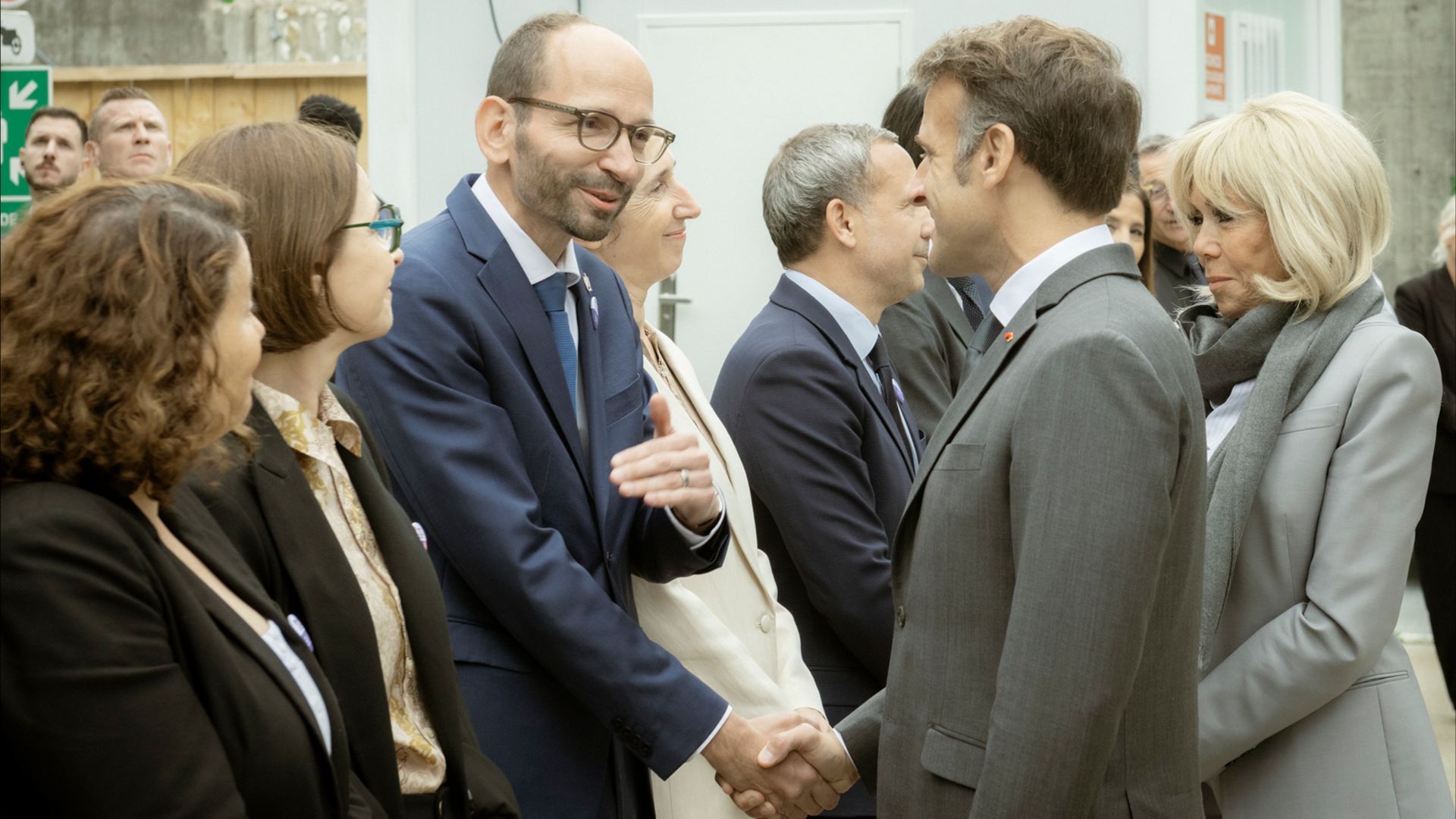
© Renaud Maridet, AP-HP
A decisive milestone marking the launch of construction of the first university hospital institute dedicated to child neurodevelopment.
Alongside families and associations, and in the presence of Adrien Taquet, Chair of the Institute’s Supervisory Board, Nicolas Revel, Chief Executive of AP-HP, Professor Édouard Kaminski, President of Université Paris Cité, Professor Didier Samuel, Chairman and Chief Executive Officer of Inserm, Anne-Isabelle Etienvre, Chief Administrator of the CEA, and Professor Yasmine Belkaid, President of the Institut Pasteur, the ceremony marked a major step towards fulfilling an ambition pursued since 2021: to better understand the developing brain in order to bring lasting improvements to children’s health, learning and wellbeing.
This foundation stone symbolises the transition from vision to reality. It gives concrete form to the creation of a unique centre in France, designed to bring together researchers, doctors, healthcare professionals, families, associations and innovation stakeholders around a shared goal: enabling every child to grow up in the right conditions and to thrive.
A major public health issue
Today in France, one child in six has a neurodevelopmental disorder, whether autism spectrum disorder (ASD), a DYS disorder, attention deficit disorder with or without hyperactivity (ADHD), or an intellectual disability. One child in five experiences learning difficulties, and one child in five lives below the poverty line. These vulnerabilities emerge in the earliest years of life and can have lasting consequences, yet diagnosis times are still often long and care pathways remain fragmented between health, medico-social and educational services.
In response to this challenge, the Robert-Debré Institute for the Child’s Brain is founded on a simple conviction: the earlier vulnerabilities are identified, the more effectively it is possible to act in support of a child’s life trajectory.
A scientific, medical and societal project unique in France
Awarded the status of Institut Hospitalo-Universitaire (IHU) in 2024 under the France 2030 programme, the Robert-Debré Institute for the Child’s Brain was jointly founded by AP-HP, Inserm, Université Paris Cité, the Institut Pasteur and the CEA. Since its launch, the Institute has been developing its activities beyond the walls of the future building.
Nearly 400 professionals, bringing together around ten clinical departments at Robert-Debré Hospital and around twenty research units, are already working together around four major missions:
- Understanding the mechanisms of brain development in children.
- Identifying neurodevelopmental vulnerabilities at an early stage.
- Improving support and care pathways for children and their families.
- Developing new therapeutic, educational and digital solutions based on the latest scientific evidence.
Its ambition extends far beyond the hospital itself. The Institute is intended to generate knowledge, tools and innovations that will benefit all professionals working with children, as well as families and public decision-makers, both nationally and internationally.
A building serving a new model
By 2028, the future 14,000 m² building on the Robert-Debré AP-HP University Hospital site will house:
- Specialised consultations and day hospitals.
- Clinical and fundamental research laboratories.
- Spaces dedicated to innovation and clinical trials.
- Collaborative areas for families and associations.
Fully connected to Robert-Debré Hospital’s research departments and designed as a genuine neurodevelopment ecosystem, it will enable smoother circulation and closer interaction. Bringing teams and expertise together within the same building will help sustainably reduce the time between scientific discovery and its practical application for the benefit of children.
The building has received State support amounting to 40 million euros, allocated as part of the national mental health and psychiatry conference.
A place designed around children and their families
The building was designed by the architecture practice AIA Life Designers to meet the specific needs of young patients and their families.
“The project imagined by AIA creates a calming journey for children and for those accompanying them. The arrival sequence has been designed to reduce the stress inherent in any hospital visit. What is being created here is a fantastic interior world, detached from the traditional codes of healthcare architecture and intended to stimulate the imagination,” said architect Guillaume Bourdieux.
The laying of this foundation stone marks the start of a new phase: the construction of a place where research, care, education and innovation will work together to give every child the best possible chance to grow, learn and thrive. This is what the President of the Republic wished to celebrate during this foundation-stone ceremony.
À lire aussi
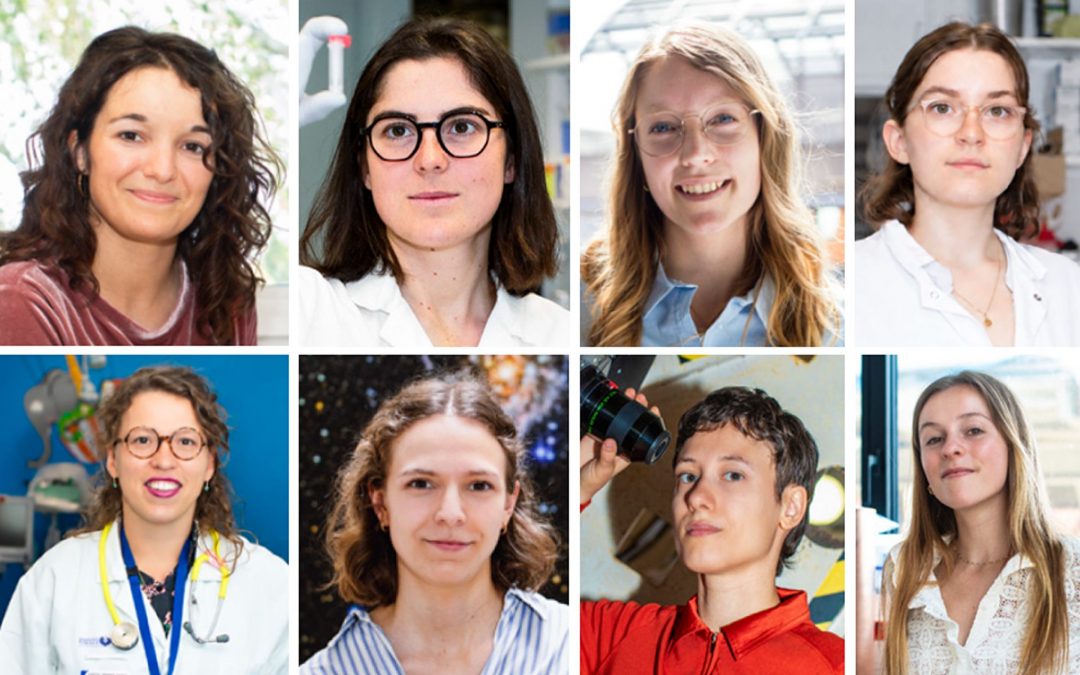
8 jeunes chercheuses de l’Université Paris Cité récompensées par le 20e Prix L’Oréal-UNESCO Pour les Femmes et la Science France
La Fondation L’Oréal, en partenariat avec l’Académie des sciences et la Commission nationale française pour l’UNESCO, a annoncé ce mardi 6 octobre le palmarès du Prix L’Oréal-UNESCO Pour les Femmes et la Science France 2026. Cette édition met à l’honneur 8 doctorantes...
Les écarts de rémunération entre les femmes et les hommes à l’université Paris Cité en 2025
Dans le cadre du décret du 5 décembre 2023 relatif à la mesure et à la réduction des écarts de rémunération entre les femmes et les hommes dans la fonction publique de l’État, l’Université Paris Cité publie son index annuel de l’égalité professionnelle pour 2025....

La Vie de Galilée : quand le théâtre fait vivre la science et l’esprit critique
Le mardi 6 octobre 2026, le Théâtre Municipal de Fontainebleau accueillait l’avant-première de La Vie de Galilée. Cette création, portée par l’Université Paris Cité et la Compagnie Gepetto, a réuni près de 200 spectateurs autour d’une même question : comment continuer...

Formation de la Terre : une étude remet en question l’hypothèse historique du « vernis tardif »
Contrairement à l’hypothèse fondatrice du « vernis tardif » (« late veneer »), proposée dans les années 1970, la Terre n’aurait pas connu d’apports importants de matériaux sidérophiles, ayant une forte affinité avec le fer, une fois la formation de son noyau achevée....