

Antibiotic resistance represents one of the greatest health threats of our time. Through her research, Yaëlle Wormser, a doctoral researcher within the university’s Antimicrobial Resistance Graduate School and winner of the “Ma thèse en 180 secondes” competition, proposes using a non-pathogenic bacterium as a model to accelerate the search for tuberculosis treatments. In this interview, she looks back on her academic path, the challenges of antimicrobial resistance, and the innovative approach developed as part of her thesis.
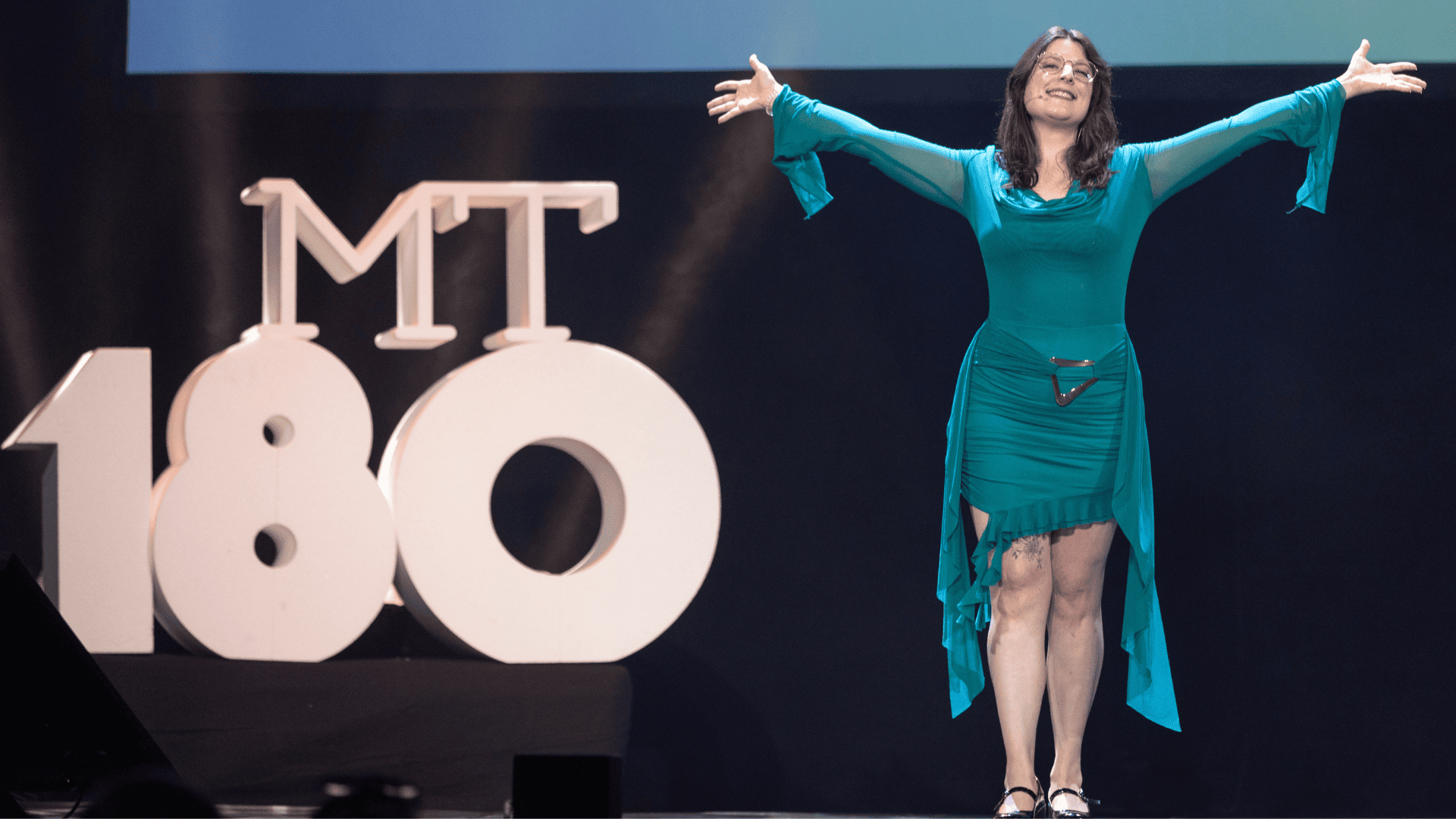
Yaëlle Wormser, on stage at the Ma thèse en 180 secondes competition.
© MT180 – France Universités – CNRS ; Alexandre Sitter
Can you tell us about your thesis topic and the questions it raises?
My thesis is titled “Corynebacterium glutamicum as a model system for studying the DNA gyrase of Mycobacterium tuberculosis.” Put more simply, my goal is to prove that a harmless bacterium can serve as a model to speed up the discovery of new antibiotics against tuberculosis. While many people think it has been eradicated, tuberculosis remains today the leading cause of infectious disease mortality worldwide. Indeed, the bacterium responsible for this disease is difficult to study: it grows slowly, it is highly dangerous, and it requires high-security laboratories.
My approach involves using Corynebacterium glutamicum, a non-pathogenic bacterium closely related to the tuberculosis bacterium (Mycobacterium tuberculosis). It grows much more quickly while sharing many characteristics with the tuberculosis bacterium, notably a highly impermeable membrane.
We are particularly interested in an essential protein, DNA gyrase, present in both bacteria and targeted by certain antibiotics used against tuberculosis. By demonstrating that the DNA gyrase of Corynebacterium glutamicum functions in a very similar way to that of Mycobacterium tuberculosis, we hope to prove that this non-pathogenic bacterium can serve as a reliable model for identifying new tuberculosis antibiotics more quickly.
Antibiotic resistance is often described as one of the major health threats of the 21st century. How does your research fit into this urgent issue?
Antimicrobial resistance is a major public health issue, particularly in the case of tuberculosis. Some strains of the tuberculosis bacterium have become resistant to the antibiotics normally used, which considerably complicates patient care.
This situation particularly affects countries where access to healthcare is limited and where antibiotic use may be inappropriate, which fosters the emergence of resistance.
By proposing a model bacterium that is simpler and faster to study than the tuberculosis bacterium, we hope to speed up the early stages of new antibiotic discovery. The goal is to gain precious time in the fight against antimicrobial resistance, before testing the most promising molecules on the bacterium responsible for tuberculosis.
How does your work help us better understand the mechanisms of antibiotic resistance, and what prospects does it open up for the development of future treatments?
In the longer term, Corynebacterium glutamicum could be used to rapidly test numerous molecules using an approach called morpho-screen, a project developed by Julienne Petit, Daniel Krentzel, and Yves-Marie Boudehen within the Bacterial Cell Cycle Mechanisms Unit, which involves analyzing changes in the bacterium’s shape in response to different treatments.
Indeed, each class of antibiotics causes a specific morphological change. So when a new molecule triggers a response that differs from known profiles, this can reveal a novel mechanism of action and potentially lead to the discovery of new antibiotic families or new modes of action, opening up new therapeutic avenues against tuberculosis.
You won the “Ma thèse en 180 secondes” competition. What message did you want to convey to the general public, and why is it important for researchers to make their work accessible?
Through this experience, I wanted to show that science can be accessible to everyone. Popularizing your research means bringing science out of the lab, demystifying the sometimes stereotypical image of the researcher, and inspiring vocations!
It was thanks to initiatives like C’est pas sorcier, the exhibitions at the Cité des sciences et de l’industrie, and documentaries that I discovered science in a different way. For a long time, I didn’t feel legitimate as a scientist, because I thought you had to be excellent at math or fit a very specific profile. That’s also the message I want to convey: research should not be seen as an elitist field. It needs a variety of backgrounds, perspectives, and ways of thinking to build a richer, more creative, and more inventive science.
Today, it is also essential for scientists to speak up more to explain their work. Scientific publications are essential, but they often remain inaccessible to the general public. In a context where misinformation and misconceptions circulate widely, it is important to build a relationship of trust between research and society. For citizens to understand the importance of research and support it, they also need to be given the keys to understanding what scientists do on a daily basis.
You completed your master’s degree and are now doing your doctorate within the Antimicrobial Resistance Graduate School, co-directed by Stéphanie Petrella, who is also your thesis supervisor. How has this training and research environment contributed to your journey as a researcher?
My master’s in Molecular and Cellular Biology, within the Antimicrobial Resistance Graduate School, was a true gateway into the world of research. In the second year, the courses became much more immersive: researchers came to present their work, which gave me a broad view of the diversity of topics in my field and helped me better understand their day-to-day work. This helped me picture myself in a scientific career and confirmed my desire to pursue a doctorate.
It was also in this context that I met Stéphanie Petrella, who was supervising practical work. Following that project, she suggested I do a thesis on antimicrobial resistance, a topic that immediately captivated me.
Beyond the coursework, the Graduate School allowed me to build my network and discover the different career possibilities available. Thanks to initiatives like the summer school or meetings with alumni, I was able to talk with doctoral students and professionals with varied backgrounds. These moments are valuable for better understanding the reality of a PhD, thinking about one’s future, and gradually building one’s professional path.
Read more
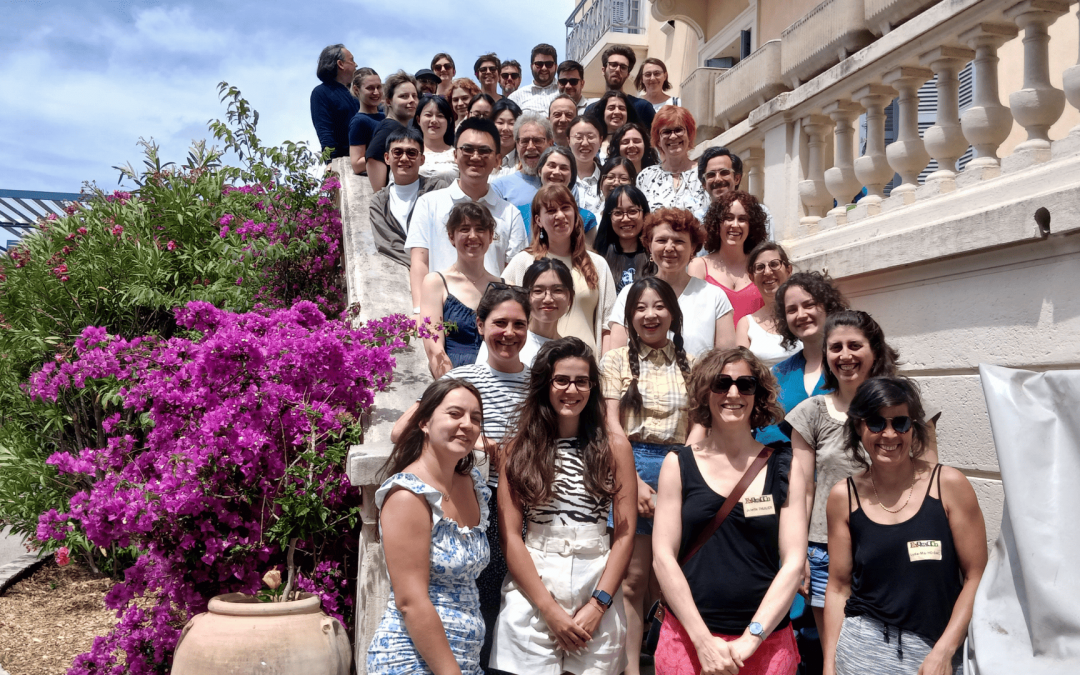
Graduate School Summer Schools: opportunities to learn, collaborate and broaden your horizons
Each year, the Graduate Schools of Université Paris Cité organize their summer schools, offering unique opportunities for learning, scientific exchange and collaboration. Students, PhD candidates and researchers come together to explore a wide range of topics,...
The Amazon, Viruses, and Vampires: what a year of One Health-Emerging Infectious Diseases webinars revealed to the world
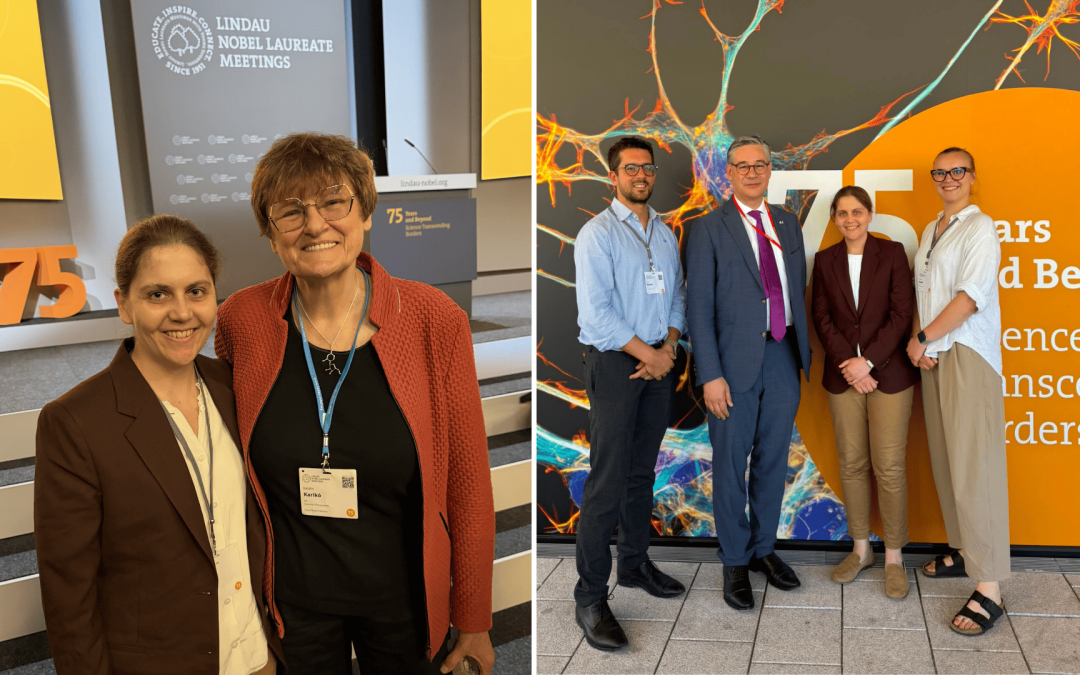
Lindau Nobel Laureate Meetings: an “extraordinary” week at the heart of scientific excellence, as told by two young researchers from UPCité
Thanks to the support of the SMARTS-UP Graduate Schools programme, Federica Namor, a PhD student at the Saint-Louis Research Institute (IRSL – Université Paris Cité/Inserm) and Marie Robert, a young doctor from the Center for Research on Inflammation (CRI – Université...

Breaking Away from Hydrocarbon Dependence: A PhD Student Analyzes Gulf States’ Strategies Amid Regional Crisis
As part of her doctoral research, Tamara Uspenskikh, a PhD candidate affiliated with the Graduate School Sustainability, Organisations, Institutions at the university, analyses the economic diversification strategies of the Gulf Cooperation Council (GCC) states in...