

As part of an international collaboration, a team from the Matter and Complex Systems laboratory (MSC – Université Paris Cité/CNRS) identifies an ingenious mechanism that allows roots to adapt to rigidifying grounds, which increases because of climate change. These results were published in Science on 16 April 2026.
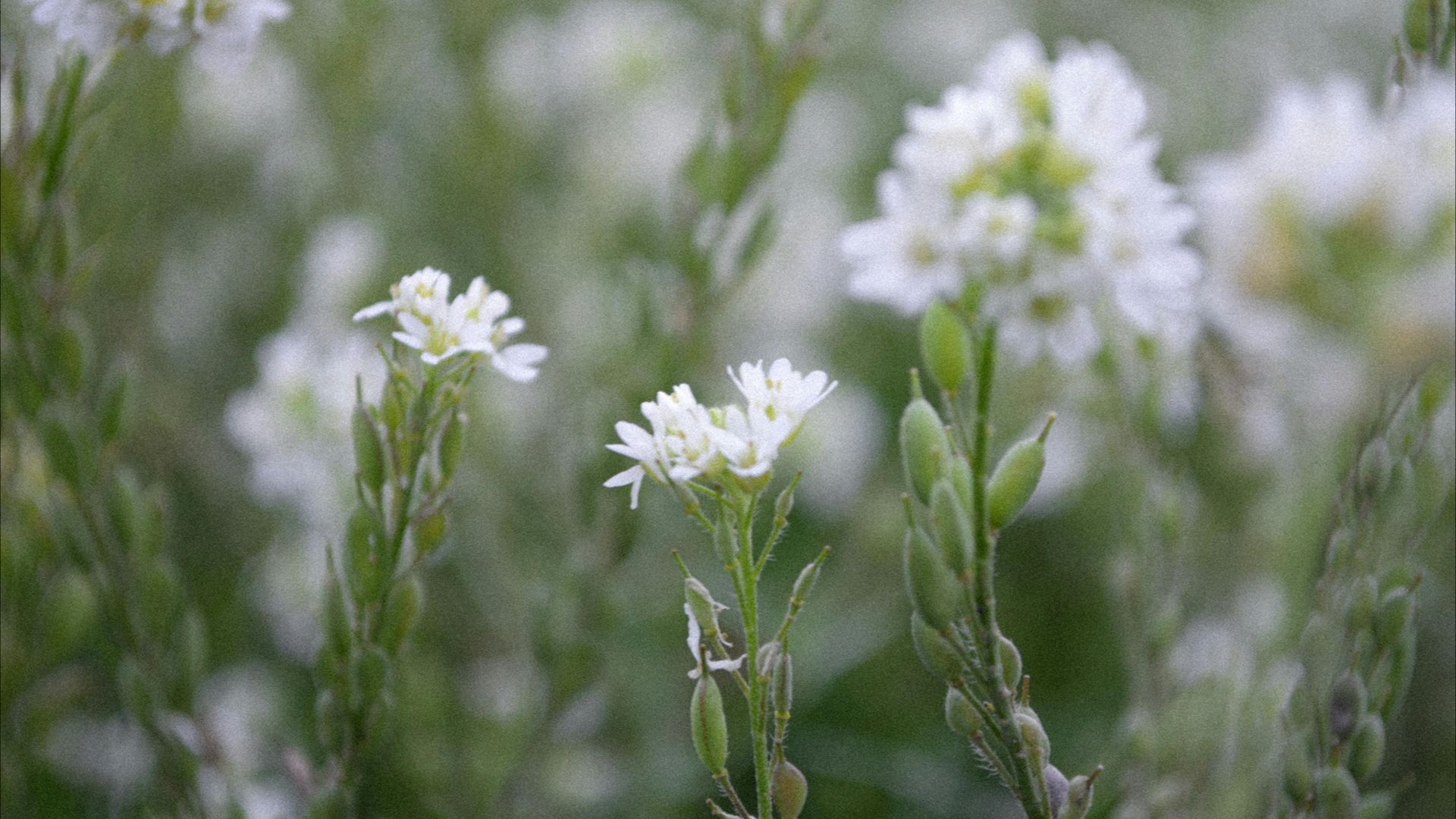
Arabidopsis thaliana (model plant)
Climate change deeply modifies soils’ features. The alternation between periods of heavy rainfall and long spells of drought causes the soil to harden, making it difficult for roots to grow – roots that are essential for accessing water and nutrients. This raises the question of whether roots are capable of adapting to grow in such conditions.
A study was carried out by an international and cross-disciplinary consortium that comprises a team from the MSC laboratory (Université Paris Cité/CNRS). They studied the behaviour of Arabidopsis thaliana (model plant) roots in hardened environments.
A self-reinforcing mechanism in roots
The results of this study show that the roots of the model plant are able to stiffen their own structure as they grow through dense media, thereby enabling them to continue growing and penetrate the soil despite increased mechanical resistance.
To understand the mechanisms behind this adaptation, the consortium demonstrated that the deformation of roots when encountering these rigid environments triggers an increase in calcium ion signals, leading to the production of reactive oxygen species (ROS). These molecules induce a stiffening of the cell walls.
To demonstrate this phenomenon, physicists at Université Paris Cité employed a unique experimental approach combining microfluidics and mechanical measurements. Roots were grown in agar gels of varying stiffness, then analysed using glass microprobes to characterise their mechanical properties.
This work thus highlights a genuine self-adaptive mechanism: the mechanical stress experienced by the roots of Arabidopsis thaliana, which would normally hinder their penetration, initiates a process of stiffening and strengthening that facilitates continued growth in dense soils.
Finally, the consortium has observed that plants which do not possess this mechanism have greater difficulties entering these environments, highlighting its key role in the adaptation to mechanical stresses.
Perspectives to understand plants’ adaptation
These works shed light on an adaptation mechanism previously uncharacterised and bring a new point of view on the relationship between plant signalling and root growth.
On a longer-term scale a better understanding of these process could help identify leverages to facilitate plants’ adaptation to limited environments (under the condition this mechanism applies to other species and turns out to be a generality).
Reference
Calcium-triggered apoplastic ROS bursts balance gravity and mechanical signals for soil navigation
Ivan Kulich, Dmitrii Vladimirtsev, Marek Randuch, Shiqiang Gao, Matteo Citterico, Kai R. Konrad, Georg Nagel, Michael Wrzaczek, Léa Cascaro, Pauline Vinet, Pauline Durand-Smet, Atef Asnacios, Lokesh Verma, Bipin K. Pandey, Malcolm J. Bennett et Jiří Friml.
Science, 2026 | DOI : 10.1126/science.adu8197
À lire aussi
Cinq jeunes chercheuses de l’Université Paris Cité récompensées par le 20e Prix L’Oréal-UNESCO Pour les Femmes et la Science France
La Fondation L’Oréal, en partenariat avec l’Académie des sciences et la Commission nationale française pour l’UNESCO, a annoncé ce mardi 6 octobre le palmarès du Prix L’Oréal-UNESCO Pour les Femmes et la Science France 2026. Cette édition met à l’honneur 5 doctorantes...

Formation de la Terre : une étude remet en question l’hypothèse historique du « vernis tardif »
Contrairement à l’hypothèse fondatrice du « vernis tardif » (« late veneer »), proposée dans les années 1970, la Terre n’aurait pas connu d’apports importants de matériaux sidérophiles, ayant une forte affinité avec le fer, une fois la formation de son noyau achevée....

Journée mondiale du handicap : agir pour une université plus accessible et inclusive
À l’occasion de la Journée mondiale du handicap, l’Université Paris Cité réaffirme son engagement en faveur d’un environnement universitaire accessible et inclusif. De l’accompagnement des étudiantes et étudiants à l’inclusion professionnelle des personnels,...

Fête de la Science 2026 : les « Saveurs savantes » s’invitent à l’Université Paris Cité
Goûter pour comprendre. Expérimenter pour apprendre. Découvrir pour savoir. Du 1er au 12 octobre 2026, l’Université Paris Cité vous invite à explorer les liens entre science, goût et alimentation ! Découvrez le programme de la Fête de la science à l'université Une...