

Continuing the progress made last year, Université Paris Cité is now ranked 60th out of the 1,000 institutions included in the Shanghai Academic Ranking of World Universities (AWRU) for 2024, and remains 4th in France.
The new Shanghai Academic Ranking of World Universities was unveiled on August 15th. Ranked 60th in the world, Université Paris Cité has seen the biggest rise among French institutions (up 9 places), achieving its highest ranking since its creation and first appearance in the ranking back in 2020.
Édouard Kaminski, President of Université Paris Cité, comments:
“We are delighted with this recognition, which underlines the influence of the research carried out by our professors, researchers and research support staff in our laboratories. I would like to congratulate and warmly thank our entire community for its commitment to research, and for the quality and impact of its work: this remarkable result – the best achieved by our university since its creation – is first and foremost theirs!
This 60th position reflects the success of the scientific strategy developed jointly by the university and its partner research organisations – CNRS, Inserm, Inria and IRD – and, in the field of health, it reflects particularly the success of the association with the Institut Pasteur and the close links with the AP-HP (the public hospital network of Paris and its region). The recognition of our research ecosystem supports the quality and attractiveness of our training programmes, including those offered by the Graduate Schools, and strengthens our innovation cluster (ValoCité).
Our remarkable progress is part of the positive overall dynamic in the region, where we are developing strong synergies. It has also benefited from the policies implemented by the French government to support research, notably through our successes in the calls for projects under investments programmes.
While I welcome this result, which has been achieved in an increasingly competitive international environment, I do have some reservations about the way in which the annual fluctuations in the rankings are interpreted in the light of the long-term nature of research, and about the various limitations of the rankings, in particular the fact that scientific output in the humanities and social sciences is not properly taken into account, and the absence of criteria relating to the quality of training courses.”
Read more
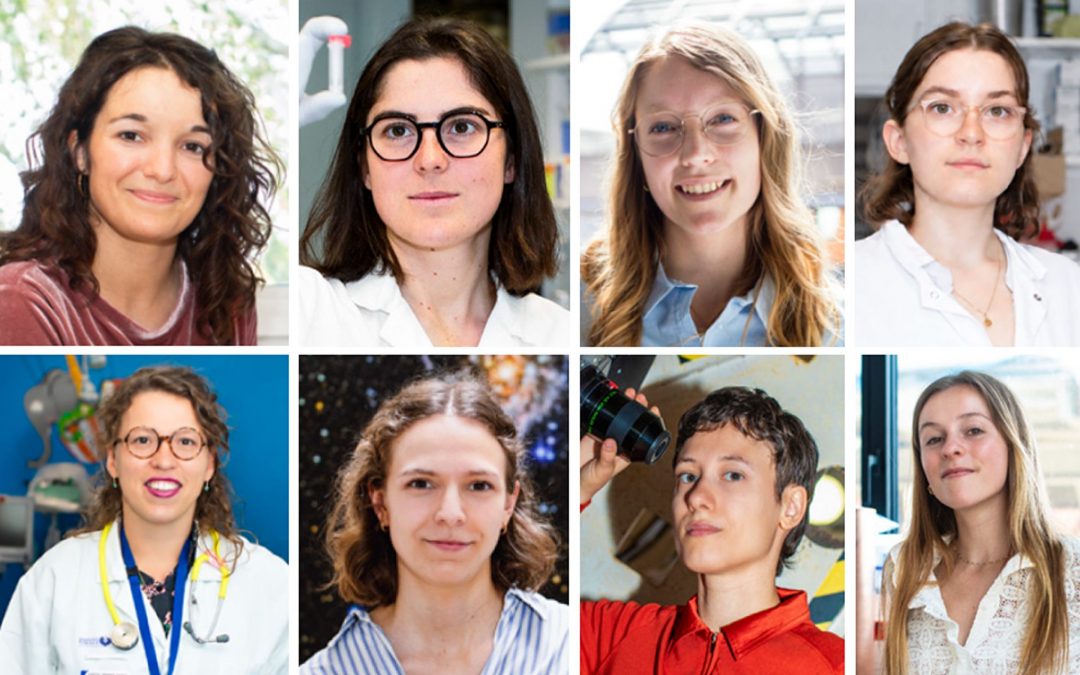
8 jeunes chercheuses de l’Université Paris Cité récompensées par le 20e Prix L’Oréal-UNESCO Pour les Femmes et la Science France
La Fondation L’Oréal, en partenariat avec l’Académie des sciences et la Commission nationale française pour l’UNESCO, a annoncé ce mardi 6 octobre le palmarès du Prix L’Oréal-UNESCO Pour les Femmes et la Science France 2026. Cette édition met à l’honneur 8 doctorantes...
read more
Les écarts de rémunération entre les femmes et les hommes à l’université Paris Cité en 2025
Dans le cadre du décret du 5 décembre 2023 relatif à la mesure et à la réduction des écarts de rémunération entre les femmes et les hommes dans la fonction publique de l’État, l’Université Paris Cité publie son index annuel de l’égalité professionnelle pour 2025....
read more
La Vie de Galilée : quand le théâtre fait vivre la science et l’esprit critique
Le mardi 6 octobre 2026, le Théâtre Municipal de Fontainebleau accueillait l’avant-première de La Vie de Galilée. Cette création, portée par l’Université Paris Cité et la Compagnie Gepetto, a réuni près de 200 spectateurs autour d’une même question : comment continuer...
read more
Formation de la Terre : une étude remet en question l’hypothèse historique du « vernis tardif »
Contrairement à l’hypothèse fondatrice du « vernis tardif » (« late veneer »), proposée dans les années 1970, la Terre n’aurait pas connu d’apports importants de matériaux sidérophiles, ayant une forte affinité avec le fer, une fois la formation de son noyau achevée....
read more