

Doing an internship
All students in bachelor’s, master’s, engineering training, DUT, can carry out one or more internships over the course of their studies, subject to specific conditions. The internship must take place outside teaching hours, correspond to the educational content of the degree, and not exceed 6 months per academic year in the same host organisation.

In Higher Education, internships are governed by the law of 10 July 2014 – n°2014-788 – aimed at the development and supervision of internships and the improvement of the status of interns.
Read more (the following content is in French)
All students enrolled in bachelors, masters, engineering and associate degree programs may carry out one or more internships during their years of study under certain conditions.The internship should take place outside normal class hours, correspond to the educational content of the degree, and not exceed 6 months per academic year in the same host organisation.
What is an internship?
The internship is a temporary period of employment, with or without European credits (ECTS), which is undertaken as part of an educational program.
In order to undertake an internship, it must be included in the course description manual. In both cases, the purpose of an internship is always part of an educational plan, and is only valid in relation to that plan, it is therefore mandatory to obtain the approval of the pedagogical team, who will ensure the added-value of the internship with regards to the curriculcum.
Why do an internship?
An internship is often an essential step of your university degree and, in some cases, the starting point for your professional life. This is an opportunity for all students to put into practice the knowledge acquired in their courses, as well as an opportunity to acquire new professional skills that they can highlight on their Curriculum Vitae. By doing an internship, a student can sharpen his or her career orientation and acquire new professional experiences.
Where to do an internship?
Some academic programs include a mandatory internship period (in a company or laboratory). Internships may, under certain conditions, be conducted abroad.
In order to be able to do an internship abroad, the student must, at the time of application, be enrolled at Université Paris Cité within the framework of a national diploma (within the framework of a co-qualifying diploma, the administrative registration must be done at the university).
When selecting the country of destination, it is necessary to take note of the information disseminated by the Ministry of Foreign Affairs, in particular on security and the conditions of entry or stay in the chosen country.
Internship procedures and references
Undergraduate students are given the opportunity to take part in an internship during their university studies. In order to verify the internal procedures of the course in which the student is enrolled, the student must contact the pedagogical secretariat of his/her degree programme.
The internship agreement formalises the legal bond between the host organisation, the university and the student. It is mandatory, this tripartite agreement attests to the student’s status as an intern and protects the student in the event of an accident.
Internship in France : Fill in the internship agreement (or addendum) online
For any questions about the signing of your internship agreement: please contact your educational secretarial office.
Internship Abroad : For more information, read here
For any questions about the signing of your internship agreement: please contact your educational secretarial office.
Beneficiaries of vocational training, i.e. with a contract for vocational and continuing training under the Labor Code, are not subject to the rules of the Code of Education regarding traineeship. The practical and financial conditions for carrying out internships are subject to the French Labour Code. For further information, the beneficiary must contact the Vocational Training correspondent of his or her component or to the dedicated department on which he or she depends.
Contacts
Information et Accompagnement :
Pôle de l’Orientation et de la Professionnalisation
Bureau des stages
Campus des Grands Moulins
Bâtiment des Grands Moulins – Aile C – RDC
10 Esplanade Pierre Vidal-Naquet Paris 13e
stage@u-paris.fr
DEFI – Pôle Formation Continue à l’Université (FCU)
Campus des Grands Moulins
Bâtiment des Grands Moulins – Aile C – 1er étage
5 rue Thomas Mann, Paris 13e
Monday to Friday : 9:30 am to 12:30 am,
1:30 pm to 5:30 pm
01 57 27 65 22
DEFI – Pôle Formation Tout au Long de Vie (FTLV)
Campus Saint-Germain-des-Près
45 rue des Saints-Pères, Paris 6e
Monday to Friday : 9:30 am to 12 am,
1:30 pm to 4:00 pm
01 76 53 46 30
formation-continue.defi@u-paris.fr
formationcontinue.u-paris.fr
Read more

A journey to self discovery – the story of a Circle U. Student Fellow
What if one conference could change the direction of your studies and make you rethink what you want to do with your future? This is the story of Emma, who discovered a new path through an unexpected Circle U. opportunity. Her experience is a reminder of the value of...
Université Paris Cité stands out once again in the 2026 Shanghai thematic ranking
The Shanghai Global Ranking of Academic Subjects (GRAS) has just unveiled its results for the 2026 edition on Tuesday 15 September. Université Paris Cité has excelled by being ranked in 26 disciplines - including 10 in the global top 50 - and by achieving 1st place in...
Université Paris Cité at EAIE 2026 in Glasgow
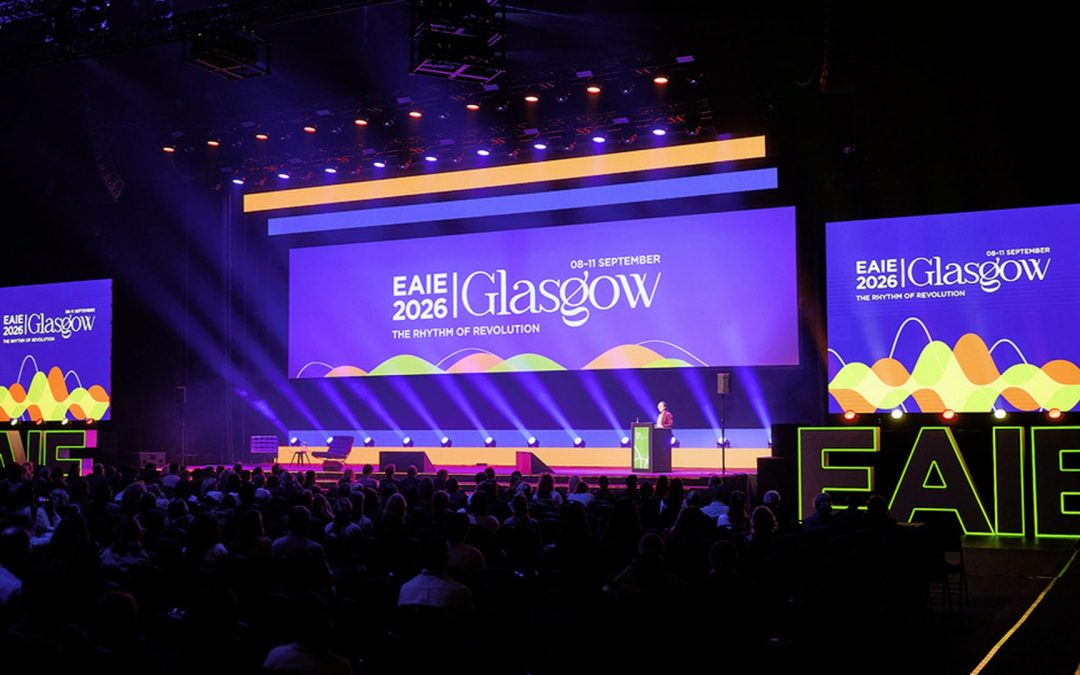
From 8 to 11 September, Université Paris Cité took part in the EAIE (European Association for International Education), the largest European higher education exhibition, held in Glasgow. As Europe's premier hub for higher education professionals, the EAIE brings...

Doctoral Mobility: Results of the Call for Projects between Université Paris Cité and the University of Toronto
As part of the strategic partnership between Université Paris Cité (UPCité) and the University of Toronto (U of T), supported by the Initiative d'Excellence (IdEx), the call for doctoral mobility projects launched in 2026 aims to develop joint activities around themes...