

Artificial Intelligence and Data Science
The Graduate School of Artificial Intelligence and Data Science aims to train experts on the most advanced techniques in artificial intelligence (AI) and data science, with an emphasis on interdisciplinarity.

Presentation
Within the wide range of disciplines where there is a high need for data analysis, Université Paris Cité represents an exceptional set of talent, and already offers several Master’s programmes addressing these issues.
The Graduate School of Artificial Intelligence and Data Science brings together pedagogical efforts related to methods at the intersection of: AI, Machine Learning, statistical learning, data analysis, data science and data-driven intelligence, addressing fundamental data analysis challenges across various disciplines.
The Graduate School of Artificial Intelligence and Data Science proposes several opportunities for educational offerings and interdisciplinary research initiatives, and works in coordination with the Data Intelligence Institute of Paris (diiP), which better prepares our students for an interdisciplinary world.
Mobility programme
We actively encourage the internationalisation of Master’s programmes by implementing various measures to welcome international students. To this end, inbound mobility scholarships are available, specifically designed for Graduate Schools.
These scholarships aim to attract and support international students who wish to join our Master’s programmes, giving them the opportunity to receive a quality education and fully integrate into our academic community.
Through these initiatives, we hope to enhance diversity and cultural enrichment within our institutions, while providing students with a rewarding and internationally recognised educational experience.
Contact
Florence CLOPPET
florence.cloppet@u-paris.fr
Masters
Masters are taught in french and english.
- Computer science:
- Double Master mathematics:
- Fundamental and applied computer science:
- Language sciences:
- Mathematics, data, learning:
- Mathematics, vision, machine learning
- Public health:
Research
The research conducted in the Graduate School of Artificial Intelligence and Data Science is highly interdisciplinary. It ranges from fundamental research in Artificial Intelligence and Data Science to the application of these techniques to various fields, including medicine and biology, chemistry and industry, engineering and integrated health monitoring, astrophysics and Earth sciences, among others.
Laboratories
- BioSTM – Biostatistics, Processing and Modelling of Biological Data (EA 7537)
- BIPID – Biostatistical Modelling, Pharmacometrics and Clinical Investigation in Infectious Diseases (IAME, UMR 1137)
- Centre Borelli (UMR 9010)
- CRC – Centre de Recherche des Cordeliers
- ECSTRA – Epidemiology and Clinical Statistics for Tumor, Respiratory, and Resuscitation Assessments (CRESS, UMR 1153)
- INRIA/INSERM HeKA (Centre de Recherche des Cordeliers)
- IRIF – Institut de Recherche en Informatique Fondamentale (UMR 8243)
- LFF- Formal Linguistics Laboratory (UMR 7110)
- LIPADE – Laboratory of Computer Science Paris DEscartes
- LJLL – Jacques-Louis Lions Laboratory (UMR 7598)
- LPSM – Laboratoire de Probabilités Statistiques & Modélisation (UMR 8001)
- MAP5 – Mathematics Applied to Paris 5 (UMR 8145)
Executives
- Yvonne BECHERINI
Representative of the Data Intelligence Institute of Paris (diiP) - Florence CLOPPET
Director of the Graduate School of Artificial Intelligence and Data Science
Professor of Computer Science at Université Paris Cité
Academic Vice-President of Valconum
Co-responsible for the Master’s degree in BioMedical Engineering – BioImaging (BIM) - Benoît CRABBÉ
Representative of the Faculty of Societies and Humanities
Head of the Master in Computational Linguistics - Anne-Sophie JANNOT
Representative of the Faculty of Health
Co-responsible for the Master’s degree in Massive Data in Health - Pavlos MORAITIS
Representative of the Faculty of Sciences
Head of the Master in Distributed Artificial Intelligence
À lire aussi
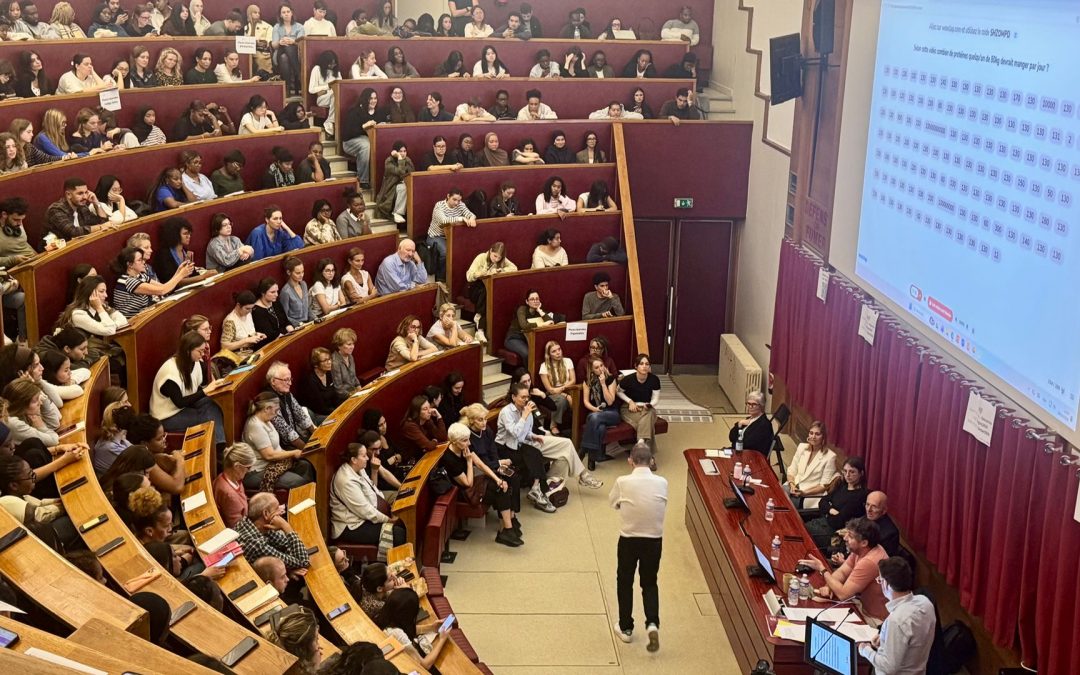
Le Grand Debunk de la Santé : une édition spéciale nutrition au plus près du public

Renforcer l’accès aux soins : la Région Île-de-France investit dans la formation des futurs infirmiers et inaugure un institut rénové au cœur de Paris
Valérie Pécresse, Présidente de la Région Île-de-France et Farida Adlani, Vice-présidente chargée des Solidarités, de la Santé et du Bien vieillir, ont inauguré ce lundi 12 octobre 2026, aux côtés de Nicolas Revel, Directeur général de l’Assistance Publique – Hôpitaux...
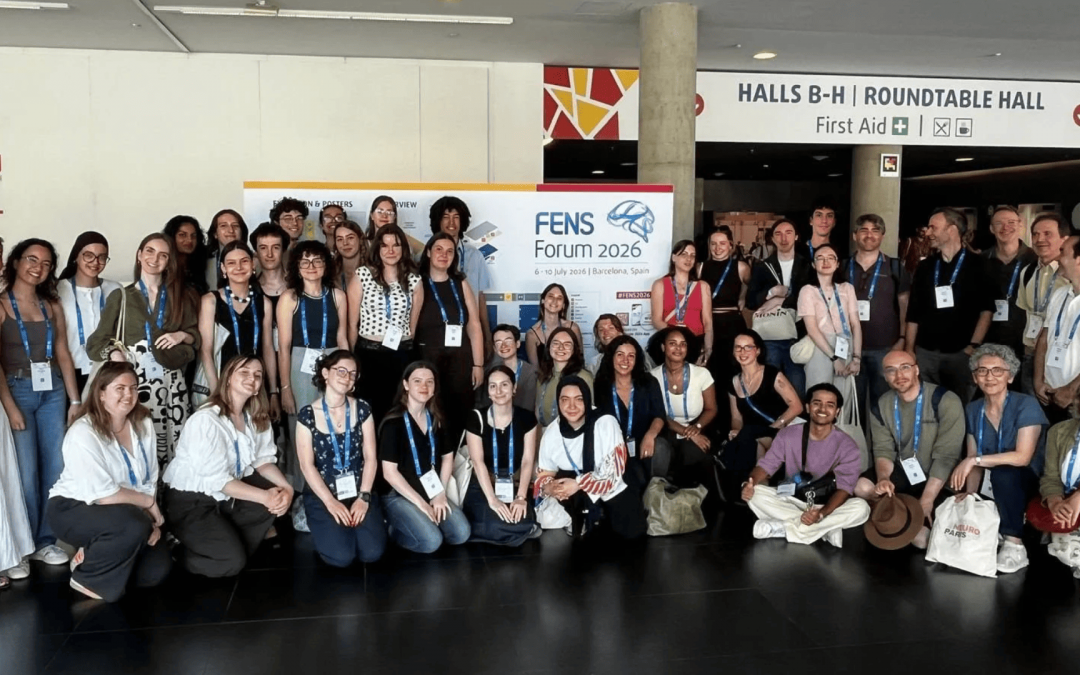
FENS 2026: Graduate School Neuroscience students at the heart of international research
This summer, 25 Master's students from Université Paris Cité's Neuroscience Graduate School attended the FENS (Federation of European Neuroscience Societies) Forum 2026 in Barcelona, Europe's leading neuroscience conference. This was a unique opportunity to immerse...
FENS 2026 : les étudiantes et étudiants de la Graduate School Neuroscience au plus près de la recherche internationale
Cet été, 25 étudiantes et étudiants en master de la Graduate School Neuroscience de l’Université Paris Cité ont participé au FENS (Federation of European Neuroscience Societies) Forum 2026 à Barcelone, le grand rendez-vous européen des neurosciences. Une occasion...