

Sustainability and Transitions
The Graduate School of Sustainability and Transitions aims to train through research in theories and tools for thinking about and implementing sustainable transitions at different scales. These transitions are based on an understanding of the issues at stake in terms of risk, equity and social and environmental justice.
Sustainability and Transitions is supported by a group of social and human sciences laboratories working closely with environmental sciences and in partnership with University of technology of Compiègne and Sorbonne University.
Presentation
By integrating the socio-technical and socio-ecological dimensions, the training courses developed in Graduate School of Sustainability and Transitions encourage:
- Case studies in relation to territories, but also with groups of students responsible for questioning and locally co-constructing transitions that mobilise contextualised knowledge and relevant academic knowledge.
- Interactions between these local approaches and more global reflections on ecological, economic and social policies to support the different forms of transitions in question.
In terms of knowledge, this training programme is based on the exploration by the human and social sciences of socio-ecological transformations[1] and the conditions of resilience of the earth system[2], in a context characterised by Anthropocene[3]. This training is part of a joint work with the physical, natural and environmental sciences, taking into account local and global dynamics.
[1] The scientific entry through socio-ecological transformations associated with the issue of resilience emphasises socio-ecological systems, i.e. a bio-geo-physical unit, as well as institutions and actors. associates. These socio-ecological systems are complex, adaptive and circumscribed with effects of context. They are particularly studied by the life sciences (ecology, evolutionary biology, agronomy, etc.) and the human and social sciences associated with local actors. The term resilience is used by a large number of people and in particular many actors from the world of development – the World Bank, the FAO, the CGIAR consortium, the French Development Agency, etc. – and the scientific community interested in societies in their environment. According to traditions of thought and action, actors tend to favour adaptation or transformation.
[2] The scientific entry through the Earth system focuses on the study of the interactions between all the Earth’s geological compartments and the living forms that inhabit them, including humans and their activities.
[3] Popularised by the Nobel Prize in chemistry Paul Crutzen and the biologist Eugene Stoermer, the word anthropocene, ‘the age of man’, now refers to a period of Earth’s history in which human action has become quantitatively comparable to certain geological forces.
Contact
contact@transitions.paris
Masters
Masters taught in French and English:
- Geography, planning, environment and development
- Risks and the Environment
- Energy
- Social Sciences
Masters taught only in English:
Research
Laboratories
At Université Paris Cité
- LADYSS – Laboratory of Social dynamics and spatial reconstruction (UMR 7533)
- LIED – Interdisciplinary Laboratory of Energies of Tomorrow (UMR 8236)
- Cermes3 – Centre for research on medicine, science, health, mental health, and society (UMR 8211)
- CPT – The Earth Politics Center
At University of technology of Compiègne
At Sorbonne University
Doctoral schools
At Université Paris Cité
- Sciences of Societies (DS 624)
- Knowledge, Sciences, Education (DS 623)
- Physics in Île-de-France (DS 564)
At University of technology of Compiègne
Executives
-
Nathalie BLANC
Université Paris Cité -
David FLACHER
University of technology of Compiègne
Partners



À lire aussi

Appel Émergence Recherche « Début de carrière » 2026 : 53 projets financés !
L’appel à projets Émergence Recherche « Début de carrière » soutient le démarrage d’une nouvelle thématique de recherche et/ou la réalisation d’une étude pilote. Il vise à renforcer la dynamique de recherche facultaire et interfacultaire de l’Université Paris Cité....
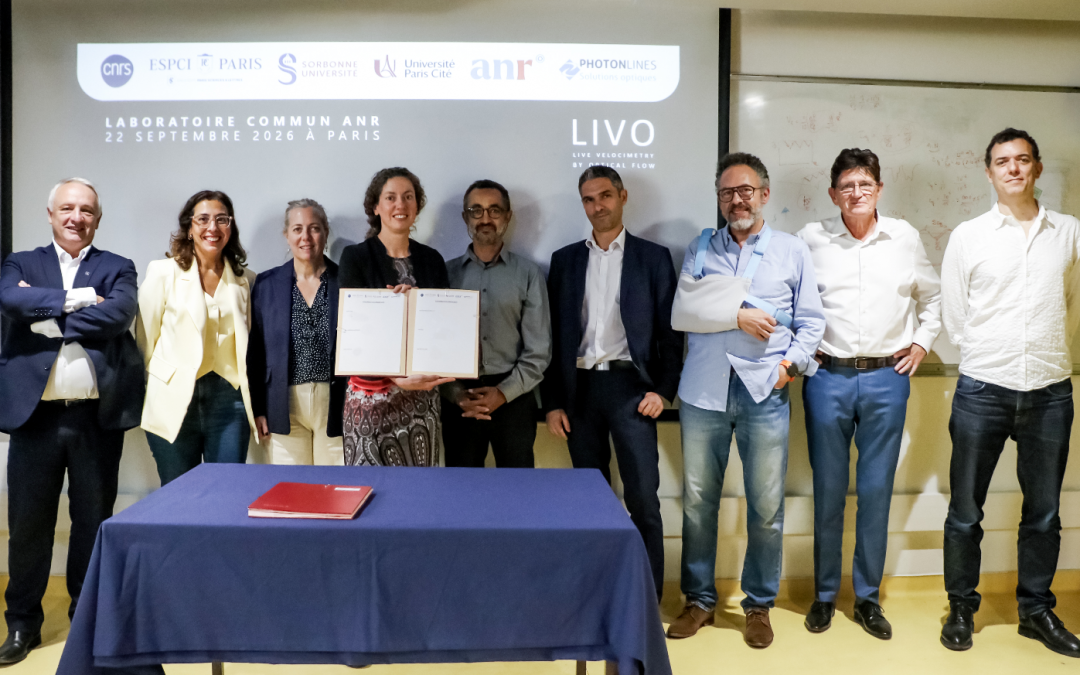
Un nouveau laboratoire commun public-privé pour transformer l’analyse des fluides
Après 8 ans de collaboration, le CNRS, l’ESPCI Paris - PSL, Sorbonne Université,l’Université Paris Cité et la PME française Photon Lines, spécialisée dans les solutionsoptiques, inaugurent le 22 septembre 2026 à Paris le LabCom LIVO (Live Velocimetry by Optical Flow)....
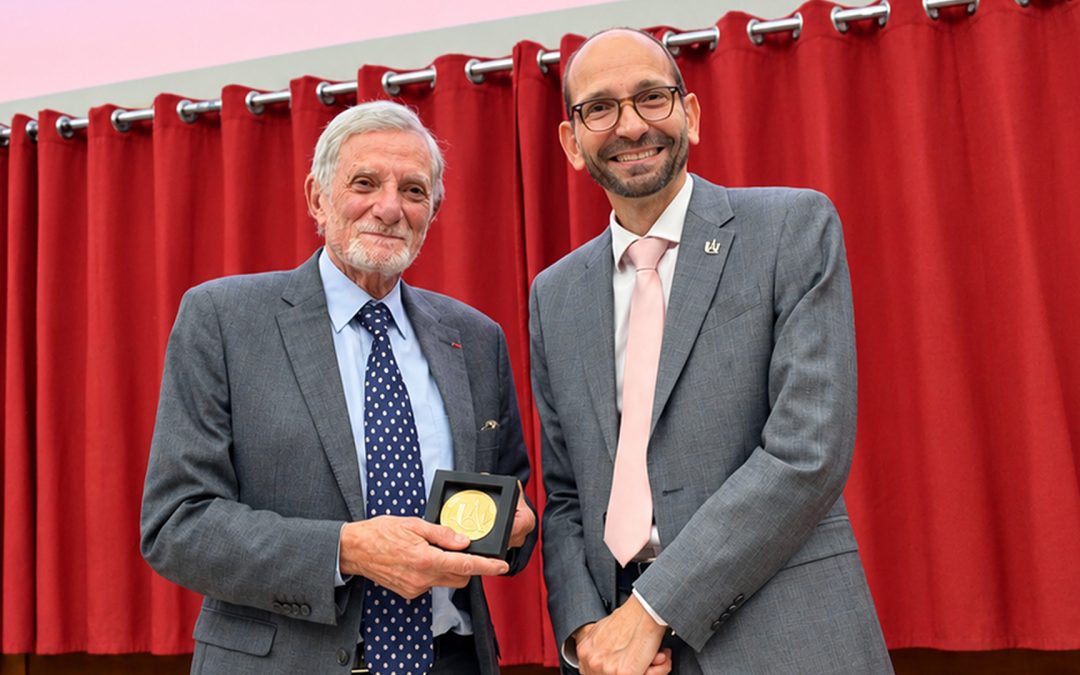
Philippe Beaune, lauréat 2026 de la Médaille de l’engagement de l’Université Paris Cité
Professeur émérite de biochimie et de biologie moléculaire à la Faculté de Santé de l’Université Paris Cité (2017-2026), Philippe Beaune est pharmacien, docteur ès sciences, ancien interne des hôpitaux de Paris et titulaire d’une maîtrise de biochimie. Sa...
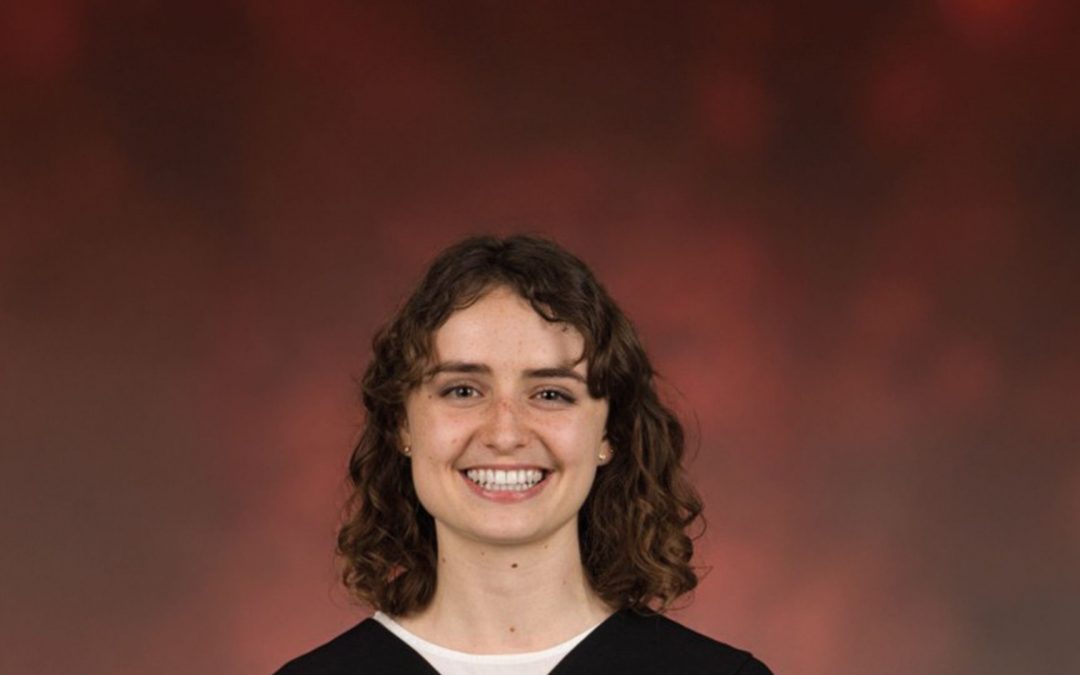
Comment Circle U. m’a aidé à me réorienter !
Et si une seule conférence pouvait changer l’orientation de vos études et vous amener à repenser ce que vous souhaitez faire de votre avenir ? Voici l’histoire d’Emma, qui a découvert une nouvelle voie grâce à une opportunité Circle U. inattendue. Son expérience nous...